


Published on: January 21, 2026, 07:54h.
Latest update: January 21, 2026, 07:54h.

- Santa Anita Park initiates a legal battle against the California DOJ over its historical horse racing machines
- The California DOJ anticipates destroying the wagering devices unless a court intervenes
Santa Anita Park has launched a lawsuit against the California Department of Justice following a raid on Saturday where 26 controversial betting machines were confiscated from the iconic horse racing venue.
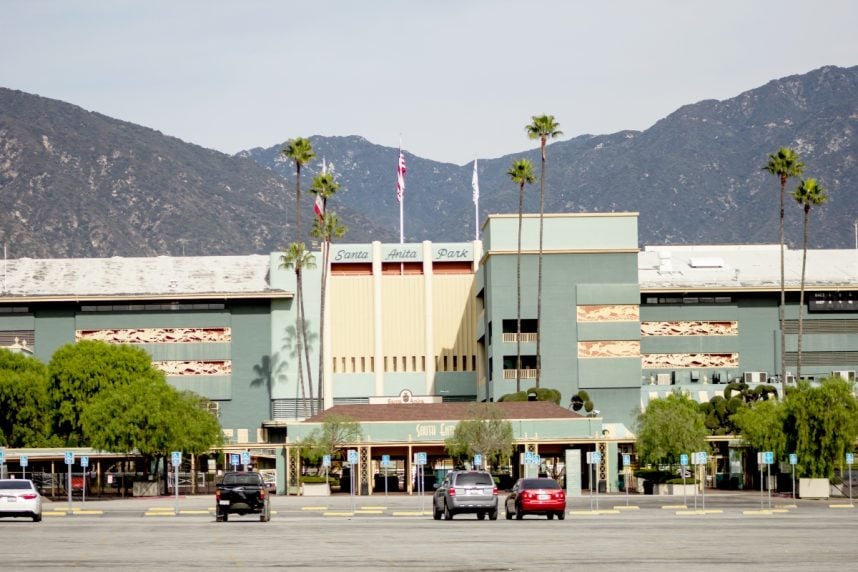
In a detailed 52-page legal complaint submitted to the Los Angeles Superior Court, the Los Angeles Turf Club, which oversees the track’s operations, states that the state lacked the authority to confiscate its Racing on Demand terminals, which allow for parimutuel betting on previously held horse races.
Representatives for Santa Anita argue that neither the California DOJ nor the California Horse Racing Board (CHRB) expressed any objections last year after the track shared its legal assessment with Attorney General Rob Bonta, indicating that the historical racing machines comply with California’s parimutuel wagering statutes. The CHRB endorsed the 3×3 wager, which these games utilize, in 2024.
“The Attorney General’s office and the CHRB never contested our legal assessments nor claimed that Santa Anita lacked the legal basis to facilitate the 3X3 wager on completed races,” the complaint contends.
The 3×3 exotic wager, or triple trifecta, requires bettors to select the first three finishers in three successive races. Available at $1 increments, this bet was suggested by The Stronach Group, which owns Santa Anita Park through its 1/ST Racing division. Stronach encouraged the CHRB to approve the 3×3 wager, claiming it could revitalize declining parimutuel betting across the state. This wager has a 22% retention rate.
Understanding Historical Horse Racing
Opponents assert that historical horse racing (HHR) machines are essentially illegal slot machines, shrewdly crafted to circumvent California’s gaming regulations which restrict traditional slots to tribal casinos. Conversely, supporters maintain that HHR games are vital for the sustainability of horse racing, arguing their legality due to their parimutuel foundation.
The DOJ has adopted the former stance, declaring that law enforcement officials did not require a warrant to confiscate Santa Anita’s racing devices because the racetrack was considered an “open business engaged in ongoing criminal behavior.” In a “notice of intention” dated January 17, uncovered by Thoroughbred Daily News, state DOJ representatives unveiled plans to destroy the confiscated HHR devices unless a court steps in within a 30-day timeframe.
“The destruction of the aforementioned machines and devices will proceed unless, before the expiration of 30 days from this notice, a legal action is initiated in a court with proper jurisdiction to reclaim possession of said machines and devices,” the state notice stated.
The racing devices at Santa Anita were developed and produced by PariMAX, another subsidiary under The Stronach Group. In its lawsuit, the track seeks a court order to prohibit the planned destruction of these devices and to affirm the legality of the wagering games.
California’s Parimutuel Wagering Legislation
In its complaint against California, Stronach contends that the state’s parimutuel wagering laws do not restrict bets to only live or simulcast races.
“The Legislature has the authority to regulate horse races, horse race meetings, and wagering based on their outcomes,” states the California Constitution.
In 2006, the California Office of Legislative Counsel seemingly concurred, suggesting that the state constitution does not mandate that “races must be live or simultaneous to be acknowledged as horse races.”