


Should the growth of prediction markets continue at its current pace, Native American-operated casinos could face a revenue decline of up to 25% as early as next year, warns James Siva.
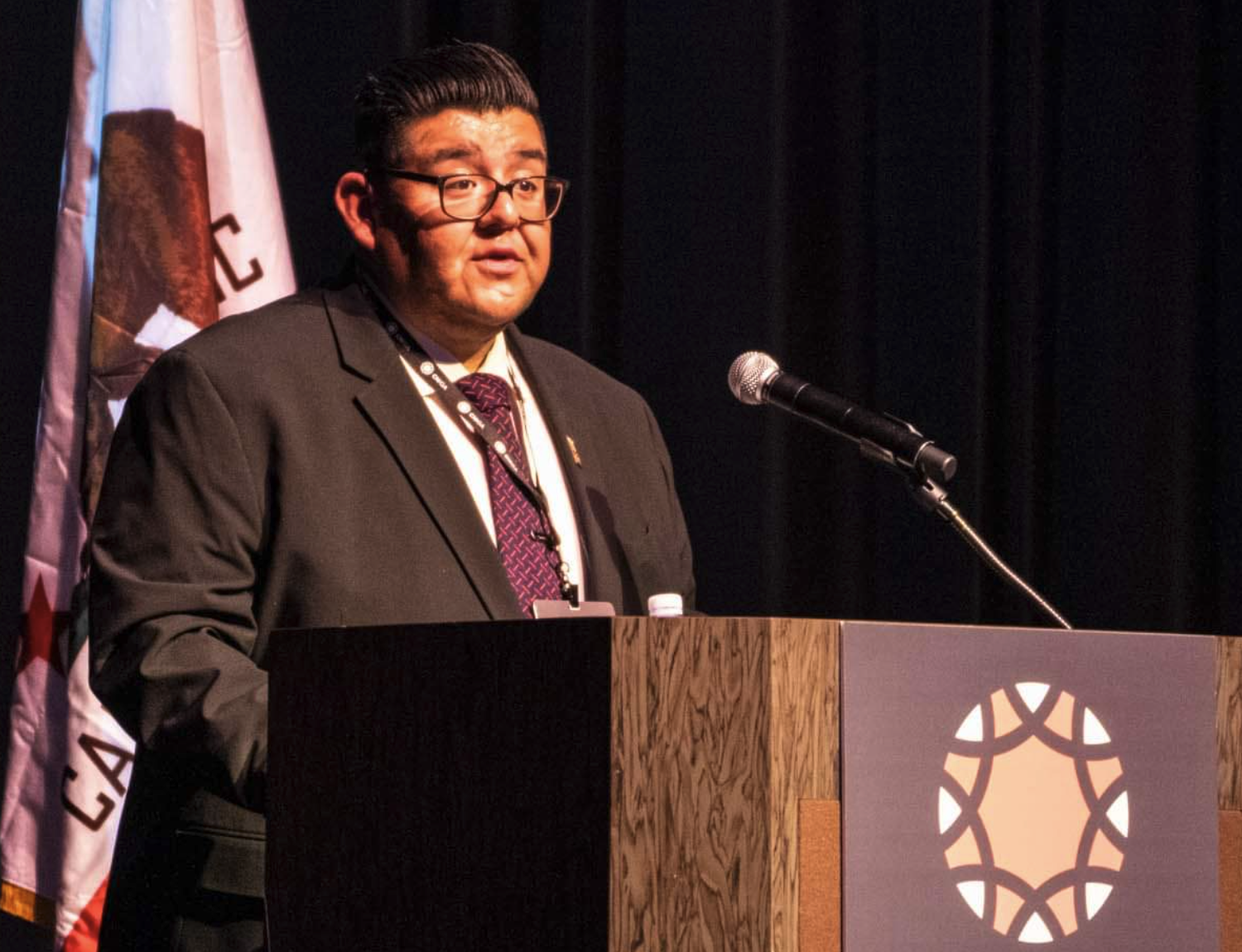
Siva, who heads the California Nations Indian Gaming Association (CNIGA), shared these insights earlier today during the Oklahoma Indian Gaming Association Conference. He noted that preliminary projections suggest tribal casino revenues could face a 5% decrease this year due to the swift rise of prediction markets. He emphasized that if “all-or-nothing” exchanges continue to proliferate, the anticipated decline could reach 25% within a year.
“To put it in congressional terms, that’s akin to defunding the BIA, the Bureau of Indian Education, and Indian Health Services,” he stated at the conference. “This is the revenue we utilize to enhance the lives of our community members that could potentially vanish from Indian country.”
Siva also serves as the vice chairman of the Morongo Band of Mission Indians, which manages a major casino resort in Cabazon, California, one of the state’s largest gaming establishments.
Prediction Markets: The ‘Wild West’
Should Siva’s forecasts be accurate, tribal casinos could experience a tremendous loss attributable to prediction markets. Earlier today, the National Indian Gaming Commission (NIGC) revealed that Indian Country casinos reported $46.2 billion in revenue in 2025, with 25% of that total equating to $11.55 billion.
While it remains to be seen if Siva’s statements are exaggerated, the American Gaming Association (AGA) estimated in May that prediction markets have siphoned off $1 billion in tax revenue, which traditionally benefits states and tribal nations. This figure has since escalated to $1.21 billion, as per the casino trade organization.
Siva, who has voiced concerns about prediction markets for some time, raised alarms about the absence of regulations and tax guidelines for these platforms.
“This is effectively a chaotic environment for these operators,” he remarked at the conference. “There are no jobs created, no advancements made for local communities, and no reinvestment in the American economy. Most of the capital is from private equity and foreign investors, meaning the majority of funds are being exported.”
The ‘Most Significant Threat’
The dissatisfaction expressed by tribal casino leaders concerning prediction markets is partly due to their exclusive compacts with the states in which they operate. Tribes perceive prediction markets as unauthorized intruders on these contracts.
Moreover, many of the predominant tribal casino regions are located in states like California where sports betting is either illegal or heavily restricted (e.g., Florida). Nonetheless, various yes/no exchanges are capitalizing on sports derivatives, encroaching on tribal gaming territories without consent.
“This poses the most critical and hazardous threat we have ever encountered in this industry,” Siva asserted to attendees at the Oklahoma conference. “It possesses the fundamental capacity to transform the landscape of gaming in this country.”