


Published on: January 7, 2026, 03:34h.
Updated on: January 7, 2026, 03:34h.

- Last year’s decline in stock price was severe due to decreased Las Vegas visitor numbers.
- An analyst suggests that current challenges could become beneficial for the casino stock in the upcoming year.
- Possibility of selling Strip assets remains on the table.
Following a year where Caesars Entertainment (NASDAQ: CZR) plummeted by 29% in contrast to a 16% increase in the S&P 500, some investors might hesitate to engage with this stock. However, Stifel has identified it as their top casino stock for 2026.
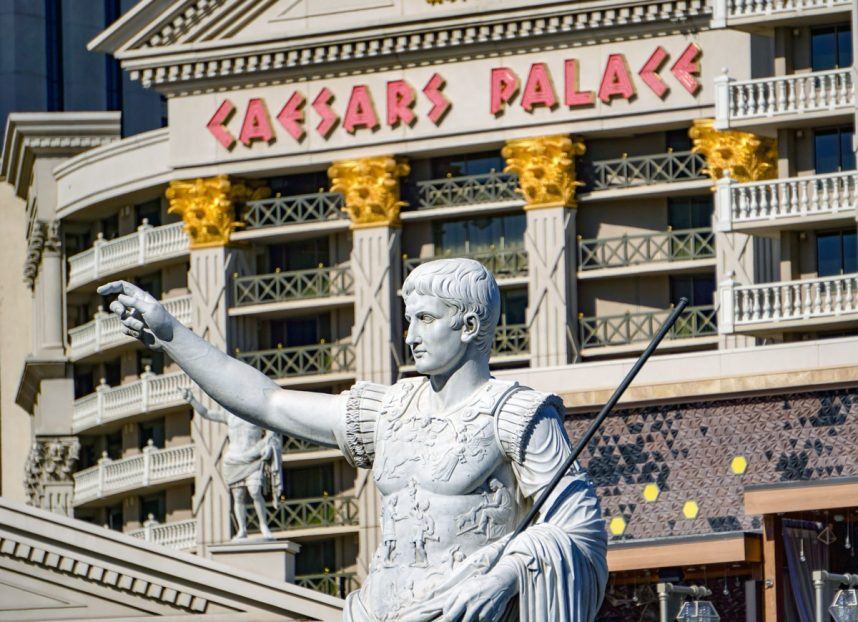
In a recent client report, analyst Steven Wieczynski declared the Horseshoe operator as Stifel’s top selection for 2026 within the Las Vegas and Macau gaming sectors. He maintains a “buy” recommendation for Caesars with a price target of $39, indicating a potential upside exceeding 65% from current valuations. While acknowledging the negative public perception surrounding Las Vegas Strip operators—of which Caesars ranks as the second-largest—Wieczynski suggests that 2026 could see better comparisons for Sin City, potentially boosting the stock.
“We believe the most significant downturn for CZR is likely behind us; management pointed out that certain Strip areas may have overly inflated pricing, and trends for September and October have shown improvement following the summer slump,” remarks Wieczynski.
He also notes that more reasonable pricing strategies, especially at Caesars’ less extravagant Strip establishments, could be a positive factor in 2026, as budget-conscious consumers have often felt alienated by pricing set by firms like Caesars and MGM Resorts International (NYSE: MGM).
Potential for Caesars Asset Sale to Enhance Stock Performance
A few years back, Caesars management stirred excitement among investors with hints of a Strip asset sale, which could have significantly lowered the operator’s debt. However, the anticipated deal never materialized, leading to shareholder dissatisfaction and ongoing focus on the company’s liabilities.
The gaming company’s attempts to sell a Las Vegas property faced challenges due to the Federal Reserve’s rate hikes over 2022 and 2023. With the Federal Reserve shifting towards lower interest rates, there’s renewed hope that Caesars might attract more willing buyers for its Las Vegas assets.
“Nonetheless, with the Federal Reserve easing rates, the possibility of a divestiture may resurface. We believe any deal aimed at reducing debt would positively impact the share price,” Wieczynski added.
The operator’s debt-to-adjusted EBITDA ratio stands at 6.7x, one of the highest in the gaming sector. Wieczynski highlights that the company has been slow in reducing its debt since the Eldorado Resorts acquisition, which has deterred some potential investors. He believes 2026 could see improved free cash flow generation from Caesars’ digital, Las Vegas, and regional divisions aiding in debt reduction.
Spinning off the Digital Division May Be an Option
Another frequently discussed but unfulfilled notion is the potential spin-off of Caesars’ interactive division, which includes its popular sportsbook. Management is aware that the investment community does not fully recognize the value of the company’s digital advancements.
Wall Street anticipates Caesars Digital will achieve EBITDA of $370 million this year; if that target is met or exceeded, it paves the way for management’s long-term goal of reaching $500 million. Wieczynski suggests that a positive result for Caesars Digital in 2026 might prompt the company to reconsider spinning off this segment.
“While it remains uncertain how a divestiture or spin-off would proceed, it’s evident that if the share price does not reflect the value of the growing online operations soon, separating the two businesses could be a strategic move, as long as integrations with the loyalty program remain intact. We believe management may share our perspective,” concludes the analyst.
This could be a strategic decision because, by some evaluations, the digital segment might be valued higher than the entire organization. By offloading even a fraction of it to public investors, Caesars could generate significant revenue that would facilitate debt reduction.