


Published on: December 19, 2025, 12:07 PM.
Updated on: December 19, 2025, 12:20 PM.

- Without a complete restoration of the gambling deduction, prediction markets could see an uptick in participation.
- Recognized as financial instruments, prediction markets are distinct from traditional gambling.
- Under the revised tax framework, prediction markets may draw in more bettors.
Conspiracy theories abound regarding a contentious tax clause embedded in the Republicans’ and President Donald Trump’s One Big Beautiful Bill (OBBB).
Beginning January 1, 2026, itemized filers will have gambling loss deductions limited to 90% of their winnings. For many years, individuals could deduct the full amount of their gambling losses against their winnings.
This amendment means a gambler who wins $100,000 but also loses the same amount will still be liable for federal taxes on $10,000 of income they didn’t actually net. Lawmakers from Nevada, including Rep. Dina Titus (D) and Sen. Catherine Cortez Masto (D), have introduced legislation to revert the gambling deduction back to 100%. The FAIR Bet and FULL House acts have garnered bipartisan support, although Republican leaders have been criticized for sidelining the proposals.
Speculation about the rationale behind the reduction in the gambling deduction includes a theory suggesting that the 90% cap benefits influential figures in Washington, D.C.
Understanding Prediction Markets
Prediction markets have sparked significant debate within the U.S. gaming sector. These online platforms and applications claim to facilitate derivative trading, enabling the purchase and sale of yes/no contracts and binary outcomes, including sports-related events.
Recently, DraftKings, a leading sportsbook in the nation, unveiled DraftKings Predictions. Similar to platforms like Kalshi, Polymarket, and Crypto.com, DraftKings Predictions operates under a license from the U.S. Commodity Futures Trading Commission (CFTC).
These prediction markets position themselves as financial instruments, allowing users to trade futures and options. Although they enable customers to wager on sports events, the operators maintain they are not involved in gambling.
While numerous state attorneys general, regulators, and lawmakers have expressed differing opinions, federal preemption supersedes conflicting state regulations. So far, the CFTC under the Trump administration has resisted requests from states to prohibit prediction markets from offering sports contracts and other futures options that potentially infringe on state gaming laws.
Trump’s Predictions
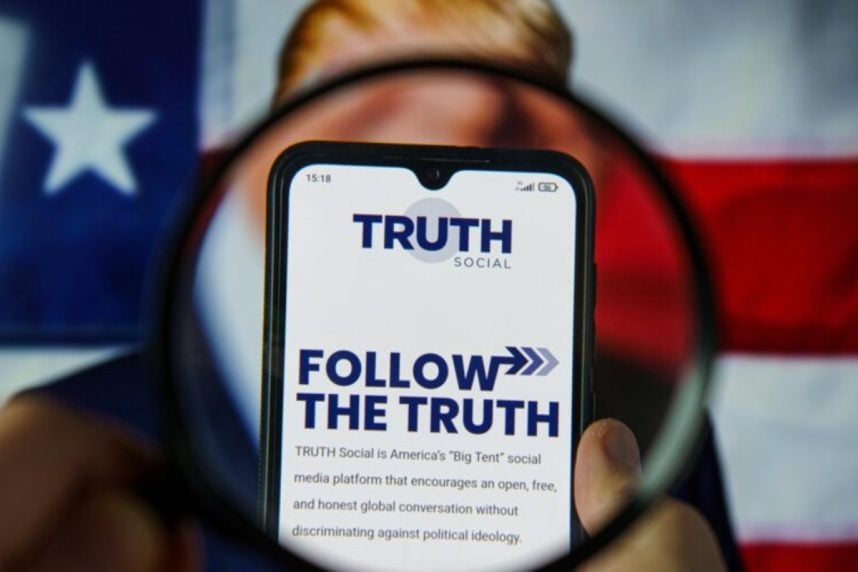
Truth Social, the social networking site of Trump Media and Technology Group—controlled by the president’s family business—aims to enter the growing prediction market arena. In October, the company revealed plans to integrate with Crypto.com, which holds CFTC licenses for derivative trading.
Truth Predict is expected to provide contracts on a variety of events, encompassing politics, economics, finance, and sports.
Could the reduction of the gambling deduction within Trump’s OBBB be a strategically designed move to favor the president’s prediction market within the tightly regulated gaming industry? While Truth Social prepares its prediction market, Donald Trump Jr. serves as a special advisor to Kalshi and Polymarket, a side role that reportedly pays generously.
For sports enthusiasts, utilizing a prediction market for sports betting in the following year will offer tax benefits, as losses from prediction markets can still be deducted fully against winnings. This is due to the classification of CFTC-regulated prediction markets not as gambling, allowing for financial losses to be offset on itemized returns against income.
Additionally, there are rumors of prediction markets considering expansion into casino-like games. If a prediction market can facilitate the buying and selling of shares based on the outcome of sporting events, could the same regulatory framework apply to shares of whether an online casino slot machine will win or if a blackjack hand will lose?
The 90% gambling loss deduction feature in OBBB was incorporated during the Senate Finance Committee’s deliberations. Sen. Mike Crapo (R-Idaho), who has consistently aligned 100% with Trump’s White House priorities, chaired the committee.