


Published on: March 31, 2026, 07:21h.
Updated on: March 29, 2026, 04:22h.

- Historical precision took a backseat to other design priorities in vintage Las Vegas signage
- These priorities included allure, visual clarity, and structural integrity
- In three out of four examples below, the animals shown don’t even match the businesses’ names
Las Vegas has consistently prioritized visual allure over accuracy in its signage. The city thrives on glamour, clarity, and emotional resonance, rather than strict adherence to factual details. Below are some of the most notorious mismatches that locals and visitors alike often overlook. (Did we leave any out? Share in the comments!)
The Silver Slipper
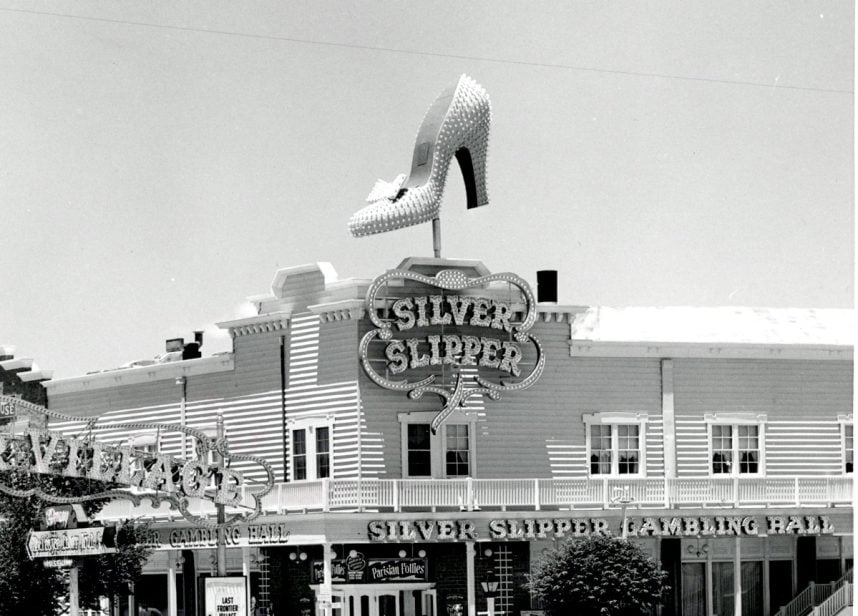
The Silver Slipper’s sign showcases a distorted version of a slipper that’s never quite existed: an arched instep, pointed toe, and stiletto heel don’t belong to a typical slipper. Moreover, the term “slippers” was never slang for high heels.
This design mistake was conceived by Jack Larsen Sr., a former Disney animator who later joined YESCO (Young Electric Sign Company), the firm behind numerous famous Las Vegas neon signs. Larsen drew inspiration from a pump belonging to his wife, believing it epitomized glamour, nightlife, and the vibrant essence of Las Vegas showgirl culture.
Additionally, a flat indoor shoe would have blended into the busy visual landscape of the Strip, whereas a stiletto silhouette stands out dramatically when illuminated by numerous bulbs and rotated above Las Vegas Boulevard.
The 12-by-17-foot “slipper” was restored in 2009 and can now be admired on Las Vegas Boulevard North near the Neon Museum. A second version, located on Fremont Street East, serves as a “tribute” to the original.
Buffalo Bill’s
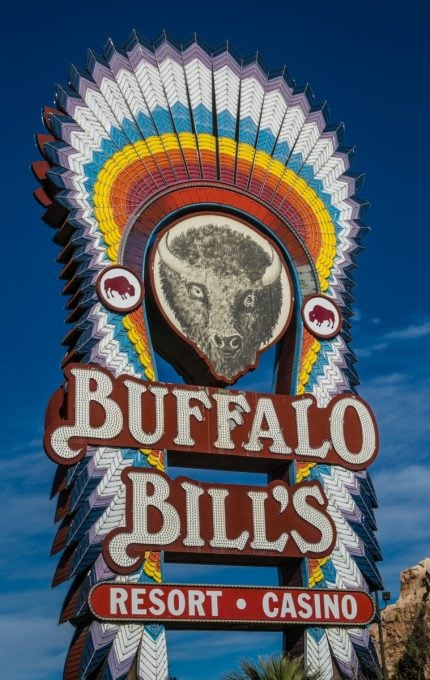
The marquee for Buffalo Bill’s, located in nearby Primm, Nevada, is a clear depiction of a bison, not a buffalo. This American native has pronounced shoulder humps, thick beards, and short horns that curve upwards.
Buffaloes, on the other hand, which possess long, curved horns and lack the humped structure, are only native to Africa and Asia. When early European settlers encountered these huge, shaggy creatures, they mistakenly declared: “Buffalo!” and the name stuck.
This gaffe not only persisted but became a staple in American culture. (Consider Bing Crosby’s 1933 hit, “Home on the Range.”) Therefore, Buffalo Bill’s sign perpetuated the error rather than contesting it.
The Golden Steer
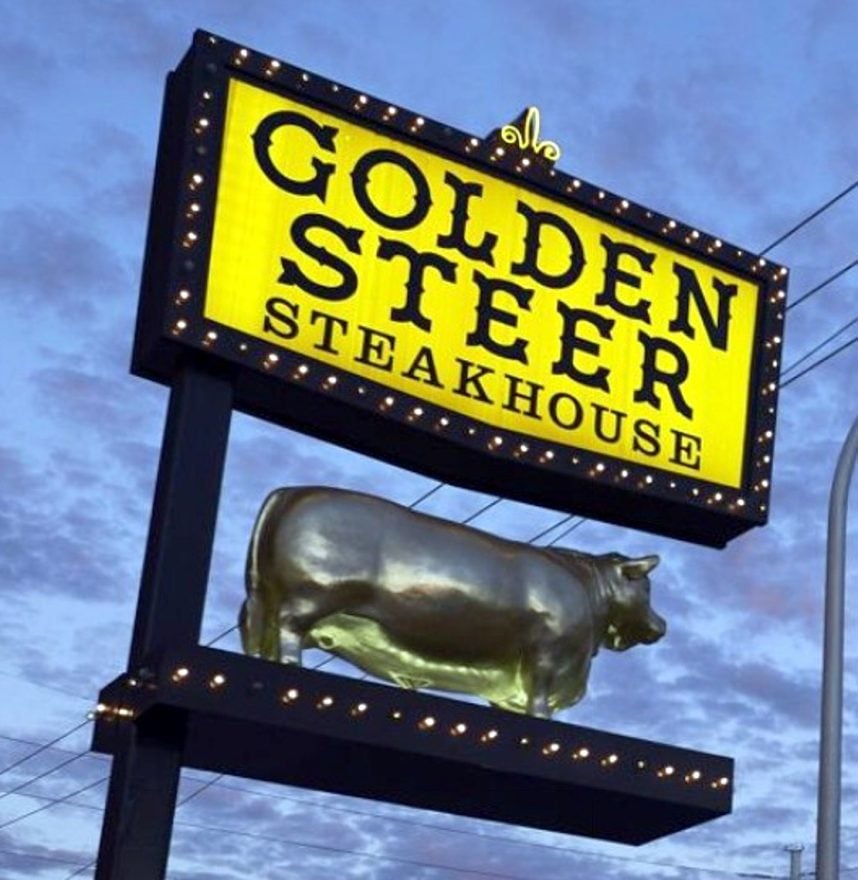
A steer refers to a castrated male bovine, which lacks the full horn development and musculature displayed in the Golden Steer’s fiberglass representation outside.
Now that’s bull.
However, steakhouse signage prioritizes selling steak rather than portraying accuracy. A hornless steer does project an equivalent rugged cowboy image as a fierce bull.
Besides, a bull is fitting for a steakhouse that claims to have opened in 1958 and served numerous Las Vegas celebrities, many of whom never dined there. (We debunked those myths here.)
The Golden Goose
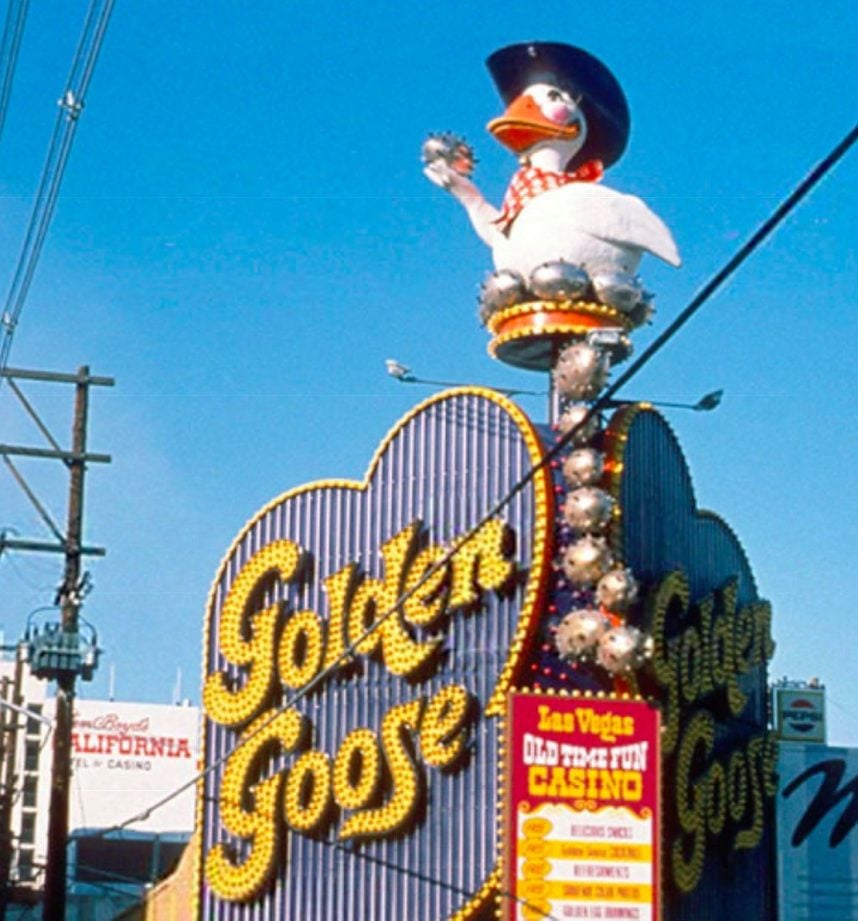
We might be pushing the boundaries of iconic misrepresentation by adding a cartoonish sign here.
But take a glance at this sign and tell me it doesn’t resemble a golden duck.
Its short neck, broad bill, and rounded body make it unmistakably duckish, but completely unsuited for a goose.
Why Herb Pastor, the owner of this Fremont Street casino, which he established on the former site of the Mecca Casino in 1975 before closing in 1980, chose not to adopt a goose silhouette remains a mystery.
One probable reason lies in practical design: ducks are compact and stable, while geese have elongated necks that could complicate a rotating sign positioned on a rooftop exposed to breezes.
Plus, ducks are just cuter.
Thus, the name indicated goose, yet the mascot resembled a duck, and this oddity went largely unnoticed.
The restored golden duck is now displayed at the intersection of Fremont Street and 10th Street in downtown Las Vegas.