


Tribal gaming is experiencing unprecedented growth for Native American communities, according to a recent report indicating that Indian casinos accumulated nearly $46.2 billion from players during the 2025 fiscal year.
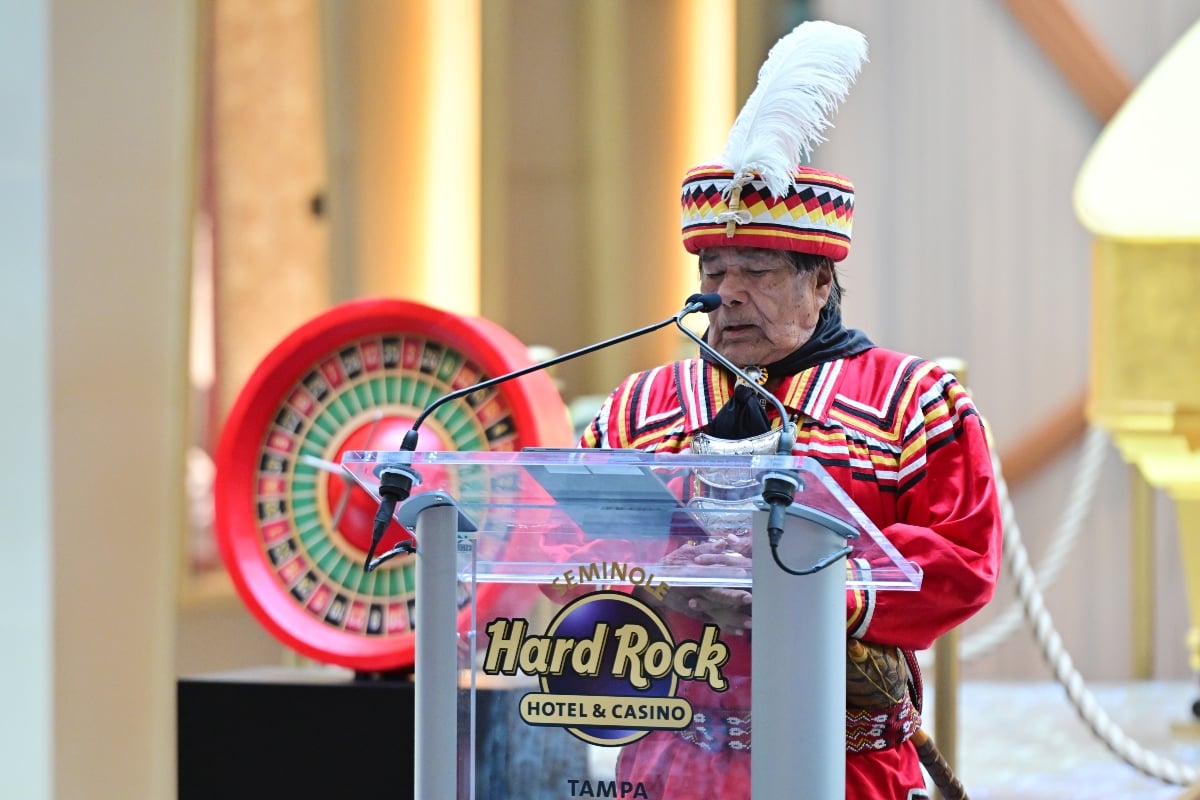
On July 21, the National Indian Gaming Commission (NIGC) disclosed that Native American-owned casinos generated a total of $46,162,783,570 during the 12-month period from October 1, 2024, to September 30, 2025. This substantial amount in tribal gross gaming revenue (GGR) reflects a 5.3% increase from the previous year, translating to over $2.3 billion in additional income.
“Indian gaming plays a crucial role in bolstering tribal economies, allowing sovereign tribal governments to invest in their communities and deliver essential services to their citizens,” stated Billy Kirkland, vice chair of the NIGC. “The Trump Administration is committed to collaborating with tribal leaders to ensure these advantages remain for generations to come.”
In the fiscal year 2025, a total of 246 federally recognized tribal nations across 29 states operated 545 gaming facilities.
The NIGC, a federal agency within the United States Department of the Interior, regulates gaming activities on Indian lands. Its primary mission is to ensure that tribes are the principal beneficiaries of their gaming operations while overseeing fair play in casino management.
This record-breaking tribal gaming revenue occurs alongside the commercial gaming sector, which also reported a new high of $78.6 billion in 2025.
Disparities in Tribal Gaming
While tribal gaming shows strong performance, it’s evident that the largest casino-operating tribes gain disproportionately.
The NIGC report indicates that a mere 8.6% of the 545 gaming venues achieved GGR exceeding $250 million for the fiscal year. These 46 properties accounted for 55.8% of the total gaming revenue in FY25.
Approximately 12% of tribal casinos reported GGR between $100 million and $250 million, contributing to 24.4% of the overall revenue. Around 11% secured casino wins in the $50-$100 million range, representing 9.3% of the total revenue, while 13.8% reported wins between $25-$50 million, summing up to 5.6% of the total earnings.
The majority of tribal casinos, constituting 54.3%, reported GGR under $25 million, making up only 4.8% of the overall gaming revenue.
California’s Gaming Supremacy and Market Growth
The NIGC’s report highlights California’s continued leadership in tribal gaming.
California tribal casinos generated $12.6 billion in GGR, maintaining a dominant position. This market also encompasses tribal casinos in Northern Nevada, although the revenue from the northern Silver State was minimal. California’s tribal gaming revenue witnessed an increase of more than 4% year-over-year.
The DC region followed closely with $11.2 billion in GGR. The NIGC classifies tribal casinos in New York, Connecticut, North Carolina, Florida, Alabama, Mississippi, and Louisiana within this market. DC tribal gaming revenue rose by nearly 10% compared to FY24.
St. Paul, which includes tribal gaming establishments in Minnesota, Wisconsin, Michigan, Indiana, Iowa, and Nebraska, saw an increase of 2%, reaching $5.3 billion. Meanwhile, the Portland area, encompassing Oregon, Washington, Idaho, and Alaska, reported a 4% growth to $4.9 billion.
The Phoenix region (including Arizona, New Mexico, Colorado, and southern Nevada) grew by 5% to achieve a total of $4.2 billion, while markets in Oklahoma City and Tulsa experienced a modest 3% increase, reaching $3.7 billion each.
Conversely, the Rapid City market (covering South Dakota, North Dakota, Montana, and Wyoming) was the outlier, experiencing a 1% decline in GGR, dropping to $439.8 million.