


Published on: December 22, 2025, at 03:10h.
Updated on: December 22, 2025, at 03:13h.

The Biden administration is intensifying efforts on the seven Western states required to negotiate a strategy to reduce their water consumption from the Colorado River. As the representatives for the states—Arizona, California, Nevada, Colorado, New Mexico, and Wyoming—remain gridlocked, federal authorities are indicating that intervention may be necessary, which, according to Politico, could lead to a Supreme Court dispute.
The regulations pertaining to the allocation of the river’s water remain valid until the end of next year. However, due to the necessary time for environmental assessments and approvals from various legislative entities, the U.S. Department of the Interior (DOI) has afforded the states less than 60 days to finalize a new water-sharing arrangement.
“Allow your commissioners the flexibility to negotiate and find compromise—if this isn’t feasible, please provide us with representatives authorized to act in your best interests,” stated assistant DOI secretary Andrea Travnicek during the Colorado River Water Users Association conference at Caesars Palace in Las Vegas on December 17.
For almost two years, the seven lower-basin states have remained at an impasse over how to collectively reduce their water consumption, as the Hoover Dam approaches critical thresholds that engineers and power managers strive to avoid.
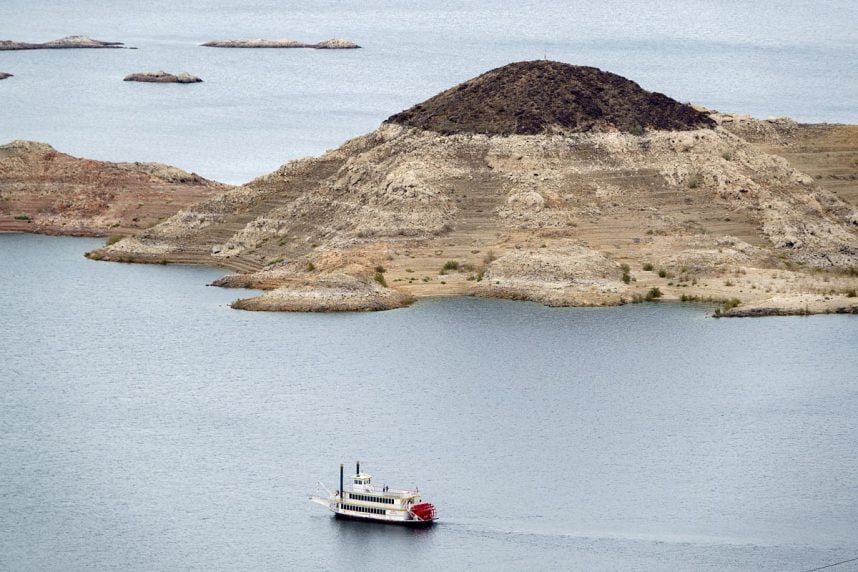
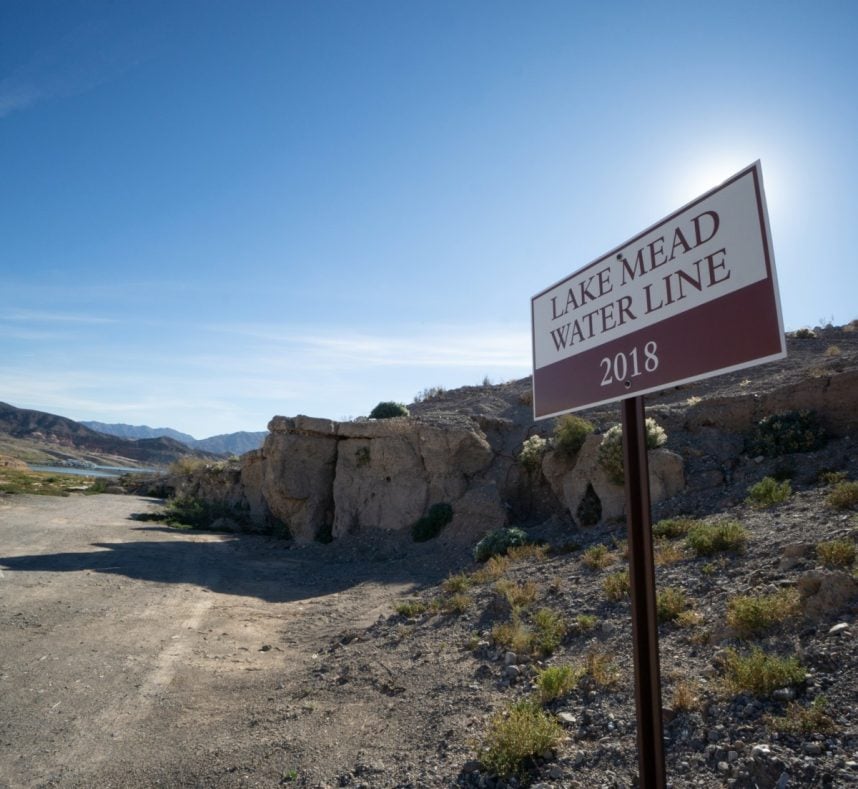
Currently, Lake Mead, the reservoir formed by the dam, stands at 1,062 feet above sea level, representing 32% of its total capacity. This figure is just 21 feet above its lowest recorded level of 1,041 feet from July 2022, which has already seen a recent uptick of 3 feet due to heavy rainfall in California.
If the lake’s level declines to below 895 feet, it would reach a point known as “dead pool,” where gravity would inhibit the release of water downstream from the dam, affecting the water supply for 30-35 million residents who rely on it.
Water Crisis Looming
The following areas would encounter dire consequences if the Hoover Dam reaches the dead pool level:
| Region | % of Water Sourced from Colorado |
|---|---|
| 1. Imperial Valley, California | ~100% |
| 2. Tucson, Arizona | ~70-100% |
| 3. San Diego, California | ~50-70% |
| 4. Phoenix, Arizona | ~40% |
| 5. Los Angeles, California | ~20-30% |
Note: These percentages are estimates and can change based on drought conditions, conservation efforts, water transfers, and alternative sources. Data sourced from water authority reports (e.g., IID, Tucson Water, SDCWA, City of Phoenix, MWD/LADWP) and recent studies conducted between 2023-2025.
Curiously, Las Vegas is absent from this list as it is currently not facing an imminent water shortage, despite deriving 90% of its supply from Lake Mead!
This is largely due to the proactive measures taken in 2017 by the Southern Nevada Water Authority, which secured funding to install a deeper intake pipe. This infrastructure will help the area maintain its water supply for the foreseeable future—even until the water level dips below the 860 feet mark at which the pipe was installed. Interestingly, Las Vegas will actually benefit from a dead pool scenario at the dam, as any water that can no longer flow downstream would lead to a conservation increase.
Time is Running Out
Natural factors are exacerbating the urgency, with inflows to Utah and Arizona’s Lake Powell only reaching 81-84% of the average this year. Unless an unusually wet winter occurs, the Bureau of Reclamation warns that Lake Powell might fall below the Glen Canyon Dam’s hydropower intakes by next fall.
Interior Secretary Doug Burgum is making efforts to assemble the seven governors for crucial discussions, though, according to Politico, no meetings have been scheduled yet.
Negotiators are struggling to even agree on a short-term “Phase 1” strategy that would span just five years. This proposed plan involves Arizona, California, and Nevada collectively reducing their water usage by 1.5 million acre-feet while the four Upper Basin states establish a conservation initiative to mitigate the decline of Lake Powell, consequently safeguarding the inflows to Hoover Dam.
Even this potential agreement is largely recognized as an inadequate temporary solution.
“The time for substantial negotiations is now,” emphasized Travnicek.