


Published on: June 1, 2026, 07:16h.
Updated on: June 1, 2026, 07:32h.

On May 21, the Southern Nevada Water Authority (SNWA) decided to initiate discussions for a water exchange with the San Diego County Water Authority. If an agreement is reached, Las Vegas would assist in financing additional output at San Diego’s Carlsbad desalination facility. In return, San Diego would retain an equal amount of its Colorado River water in Lake Mead, accessible to Las Vegas.
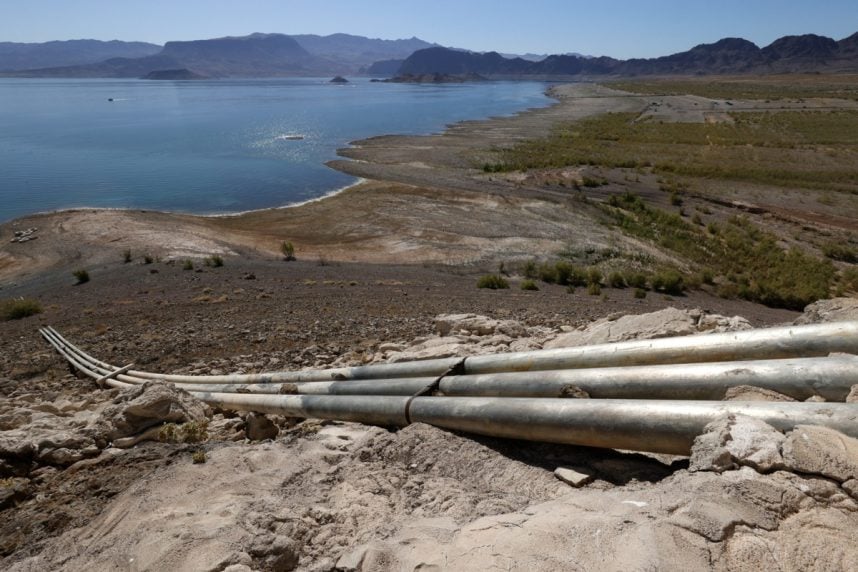
This arrangement would greatly benefit Las Vegas, which relies on Lake Mead for approximately 90% of its water supply. A federal forecast has indicated that the reservoir may decline over 20 feet below its all-time low recorded last year, in 2022.
However, various disinformation sources created to generate outrage among Southern California readers claim that not only has the water shift already commenced, it is also a physical transfer.
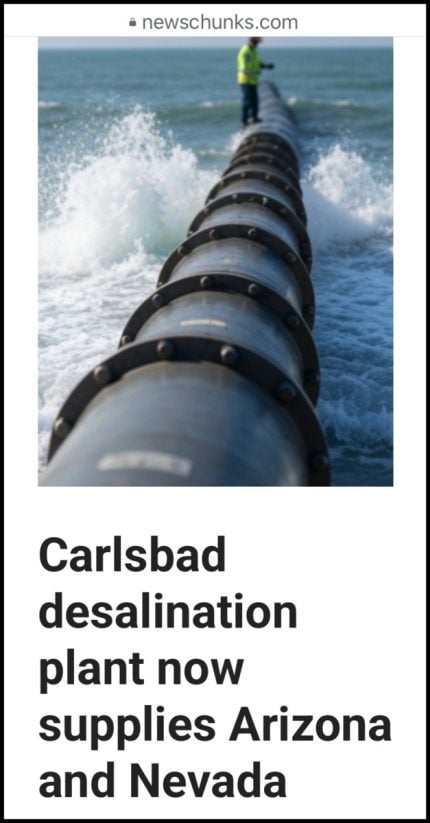 For instance, a site named newschunks.com asserts that desalinated water from Carlsbad is now being transported beyond California’s borders to serve around 500,000 residents in Arizona and Nevada.
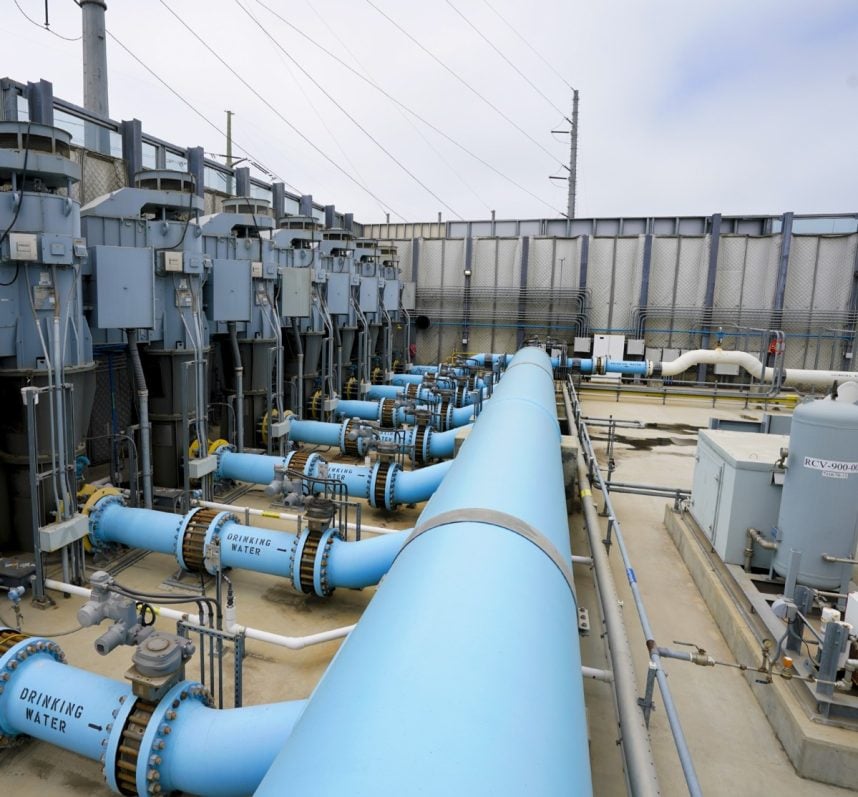
Currently, the plant produces between 50 to 54 million gallons of potable water daily but only services about 400,000 residents in San Diego County, satisfying roughly 10% of the area’s total demand.
Reactions to this article on the misleading news site’s Facebook page are overwhelmingly dramatic:
“First, let’s focus on filling our lakes and reservoirs!” one user exclaimed.
“We need to refill the Salton Sea!” another proposed.
“EXPENSIVE No-Bid Thieves!” claimed a third.
Doesn’t Hold Water
There is currently no pipeline connecting Las Vegas to Southern California (except for the metaphorical one related to entertainers), and the likelihood of one being constructed in the foreseeable future is minimal.
Here are three principal reasons:
1) Challenging Geography: The logistics of pumping water from sea level over 4,000 feet and across 400 miles of mountainous terrain is not just difficult; it’s virtually impossible.
2) Enormous Energy Costs: Transmitting such vast amounts of water uphill would demand an extensive supply of electricity, making water per gallon exorbitantly priced.
3) No Justification for Construction: A straightforward paperwork transfer offers Las Vegas equivalent water rights at a fraction of the cost, eliminating the need for a costly pipeline.
Even the proposed paper water exchange faces challenges. According to the Las Vegas Review-Journal, a group of residents known as the Water Fairness Coalition recently sent a cease-and-desist letter to the SNWA, claiming that the agency lacks the legal authority to finalize such a deal.
They argue that only the Colorado River Commission of Nevada has the jurisdiction to grant approval and have threatened to pursue legal action should the board proceed.
In conclusion, Las Vegas is not installing an unfathomably long straw to the Pacific Ocean—certainly not today and likely never.
Look for “Vegas Myths Debunked” every Monday on Casino.org. To explore past myths that have been debunked, visit VegasMythsBusted.com. If you have a suggestion for a Vegas myth that requires debunking, email [email protected].