


The notion that Las Vegas was a part of Arizona until as late as 1982 is a quirky myth that occasionally resurfaces in various online discussions and alternative history debates. This myth continues to endure because it contains a surprising nugget of truth.
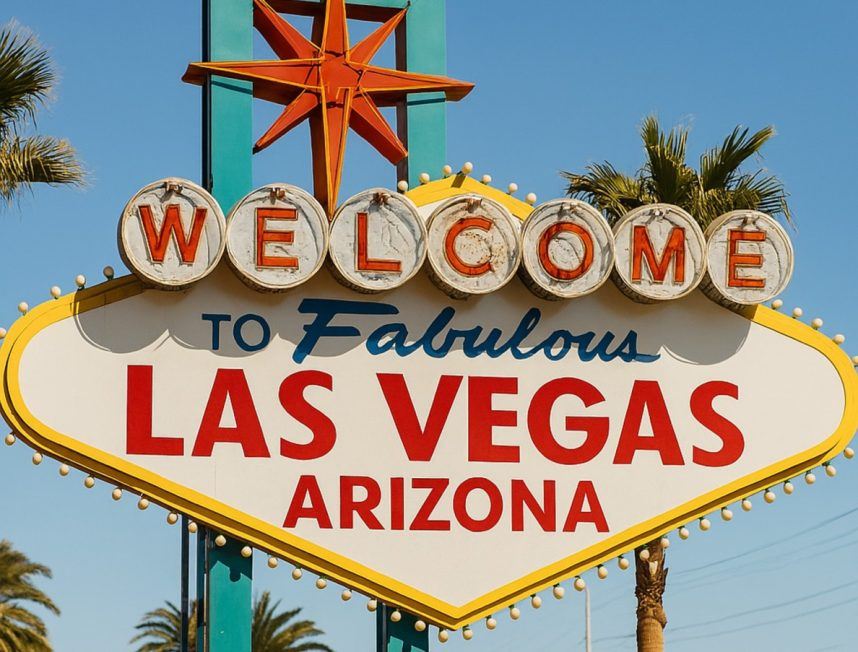
When Nevada officially became a part of the Union on October 31, 1864, Las Vegas was not included; it was part of a largely uninhabited area within the Arizona Territory.
In May 1866, Congress sanctioned the enlargement of Nevada’s eastern boundary by integrating land from the Utah Territory and annexing what was then a segment of Pah-Ute County, previously part of the Arizona Territory. (Neither region held state status at the time).
This maneuver established the triangular southern tip of Nevada, which now features notable sites such as Excalibur’s castle, Zak Bagans’ Haunted Museum, and “Zombie Burlesque.”
Officials from the Arizona Territory were less than pleased to lose this valuable mining area and access to the Colorado River. They voiced their concerns regarding the legitimacy of the federal annexation.
Octavius Decatur Gass, the owner of the Las Vegas Ranch (now remembered with a street name in downtown Las Vegas), openly resisted paying Nevada taxes, asserting his identity as an Arizonan. It wasn’t until 1871 that the Arizona Territory finally acknowledged Nevada’s legal authority over the area.
Congress mandated that the legislature of the newly formed Silver State, along with its governor, Henry Blasdel, must formally endorse the annexation. On January 18, 1867, this incorporation was officially completed.
However, a significant oversight occurred when Nevada’s constitution was not updated to reflect this addition.
Confusing Statehood
This oversight was a minor legal blunder, too obscure to even warrant a question in Trivial Pursuit.
That was until a convict drew attention to it a century later.
In 1963, off-duty police officer Jerome Peter Kuk fatally shot Steve Eligie Bowman in Boulder City, Nevada. He was convicted of first-degree murder the following year and sentenced to life in prison in 1964.
Four years later, Kuk, acting without legal representation, appealed his conviction based on the audacious claim that Clark County wasn’t technically in Nevada.
In essence, he argued that due to the unamended constitution, the prosecutors lacked the jurisdiction to try him under state law (a similar argument was made by convicted murderer Antonio Surianello eight years later, perhaps out of sheer desperation).
Even though the Nevada Supreme Court dismissed both appeals, the whole saga brought significant attention to the embarrassing constitutional blunder.
Better Late Than Never
Consequently, the Nevada legislature drafted and passed a remedial constitutional amendment in November 1981.
In the following year, Nevada voters ratified it with nearly a two-to-one majority, although rural residents of Mineral County, feeling resentful that Clark County was reaping all the congressional benefits and casino revenue, came shockingly close to rejecting it by just 116 votes.
“This certainly diverted a lot of people’s efforts, to put it mildly,” state historian Guy Rocha remarked to the Nevada Appeal in 2007. “A substantial amount of time, energy, and resources was consumed due to a failure of duty by some individuals in 1867, leaving us with unresolved historical issues.”
Look out for “Vegas Myths Busted” every Monday on Casino.org.. Click here to explore previously debunked Vegas myths. If you have a Vegas myth suggestion, feel free to email [email protected].