


Published on: January 19, 2026, 07:12h.
Updated on: January 18, 2026, 07:21h.

Many sidewalks adjacent to Las Vegas Strip casinos, such as those in front of the Venetian, MGM Grand, and Caesars Palace, are owned by these establishments, although they are public thoroughfares. These privatized pathways offer various benefits, including the ability for developers to design and maintain them aesthetically. However, contrary to common perceptions, this ownership does not eliminate the right to protest or picket in front of these properties.
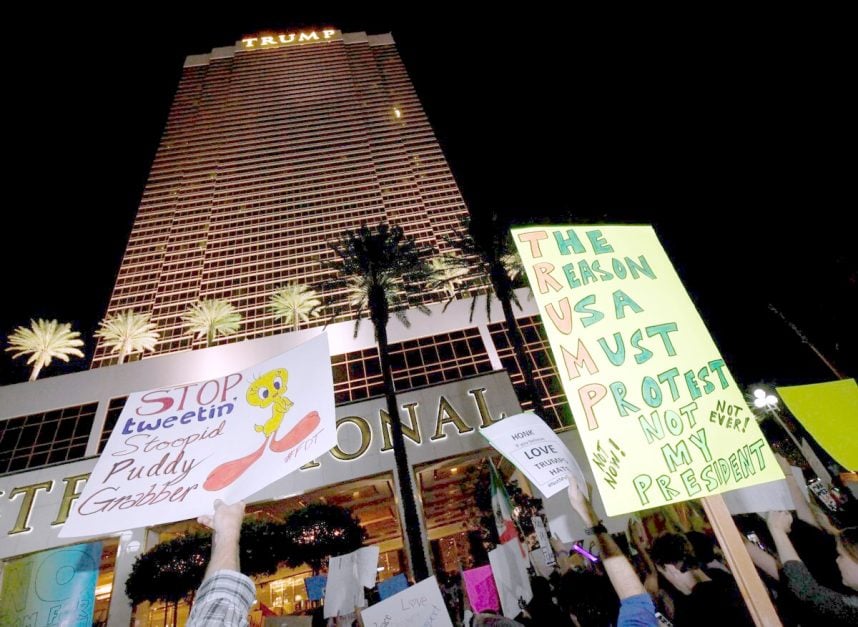
This contention is not for lack of effort on the part of the resorts. Prior to their openings, both the MGM Grand and the Venetian filed lawsuits against the local culinary union in an attempt to stop it from picketing their non-union establishments on their walkways. The lawsuits argued that the First Amendment rights to assembly do not extend to private property.
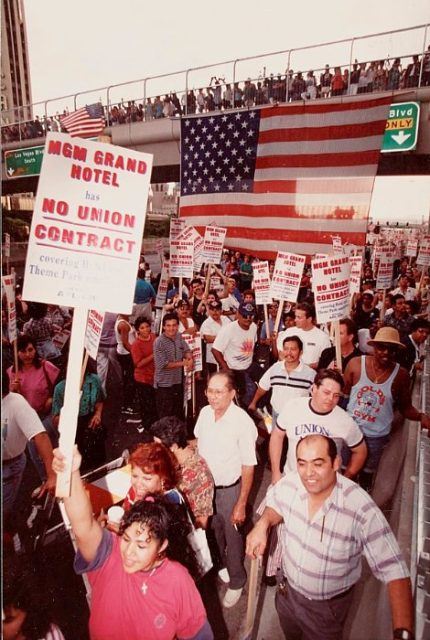
In a landmark ruling in 1993, the U.S. District Court determined that easements granted to the public by Clark County — aimed at ensuring safe access between casinos in one of the world’s busiest areas — effectively changed the MGM Grand’s sidewalks into public property.
The court also denied the Venetian’s request for injunctive relief in 1999, and both casinos faced unsuccessful appeals afterward.
Alan Feldman, MGM Resorts’ former PR director, elaborated on MGM Grand’s stance to the Las Vegas Advisor in 2020.
“During the construction of the MGM, they negotiated a deal to provide the county with land for a dedicated right turn lane from westbound Tropicana to northbound Las Vegas Boulevard,” he explained. “They secured an agreement that the land used for the sidewalk would remain under private ownership while allowing public pedestrian access.”
“The original intent was to halt demonstrations,” Feldman admitted, “although that ultimately did not succeed.”
Interestingly, the MGM Grand has been a union establishment since 1994. Since the Venetian/Palazzo reached an agreement with Local 226 in August 2024, the Las Vegas Strip is now regarded as being entirely unionized.
Bridges with Restrictions
It’s important to point out that pedestrian bridges crossing the Strip are no longer safeguarded by the same constitutional protections as the surrounding sidewalks.
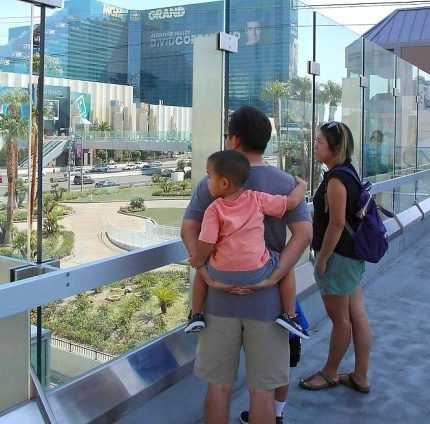
Following the approval of the Pedestrian Flow Zone Ordinance by the Clark County Commission in January 2024, safety concerns were deemed more critical than the right to assemble in this particular context. It is now illegal to “stop, stand, or participate in activities that cause others to stop or stand” on any of the 15 pedestrian bridges.
Violations could lead to a penalty of up to six months in jail or a fine of $1,000. An amendment was added to the ordinance to exempt individuals waiting to use elevators, stairways, or escalators.
In February 2024, the ACLU of Nevada filed a lawsuit in the U.S. District Court challenging the ordinance as “unconstitutionally vague” and a violation of the First and 14th Amendments, along with the Americans with Disabilities Act.
The case, initiated on behalf of Lisa McAllister, who relies on a wheelchair due to a spinal condition, and Brandon Summers, a street performer, remains active and is pending resolution.
Catch “Vegas Myths Busted” every Monday at Casino.org. For previously uncovered Vegas myths, visit VegasMythsBusted.com. Have a suggestion for a Vegas myth in need of exposure? Send an email to [email protected].