


Publish Date: April 13, 2026, 07:21h.
Updated on: April 10, 2026, 10:39h.

Are you aware that the Luxor is purportedly sinking, akin to the parts of the Titanic displayed within it? This is the impression you might get from viral videos titled “The Luxor Pyramid Is Sinking – Vegas’ Most Dangerous Casino”, and “Inside the Collapse of the Luxor: Vegas’ Most Neglected Casino Hotel”.
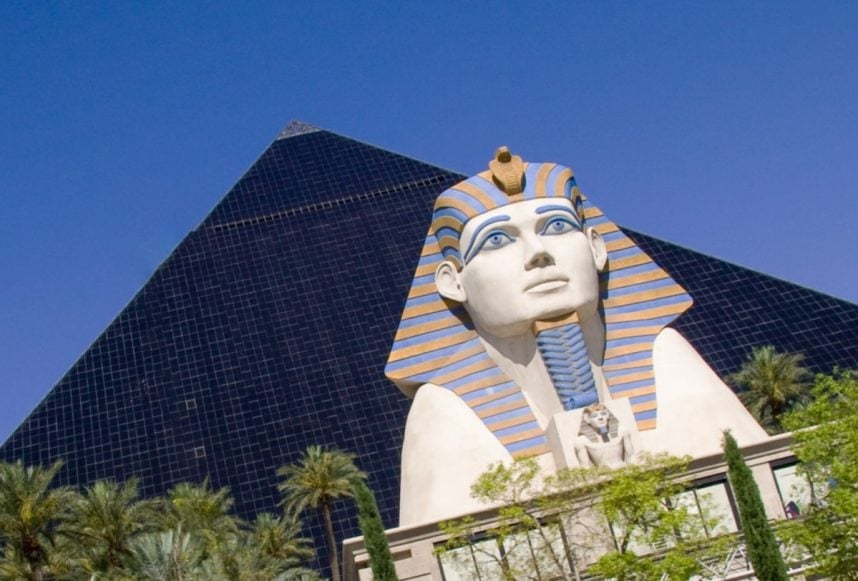
However, there have been no reports from local or national news outlets, either during the Luxor’s construction from 1993 to 1995 or in the thirty years since, regarding any threats of the hotel “sinking into the sand,” as claimed by a self-proclaimed expert who hosts the Buried Secrets podcast.
Understanding the Myth
This legend can be traced back to a single line in a 2010 entry in an online encyclopedia that stated: “Shortly after its opening, the hotel discovered that a section of the building was sinking into a soft area of the typically solid desert ground, necessitating adjustments for stabilization.”
This sentence appeared on Oct. 6, 2010, in the Online Nevada Encyclopedia, an educational platform managed by a nonprofit organization known as Nevada Humanities. But what’s the story behind it?
Upon accessing the article, its URL indicates it resides on a development server (http://www.onv-dev.duffion.com), which is typically used for testing and drafting new entries—a common practice among academic and nonprofit encyclopedia projects. These drafts await review and approval for the primary website.
Notably, a search of the main Online Nevada Encyclopedia site reveals that there is currently no article concerning the Luxor.
Casino.org reached out to Jeff Burbank, a distinguished Las Vegas journalist and author of the misinformed draft entry. He opted not to comment.
Even we can admit to making errors.
The Sinking Sentiment
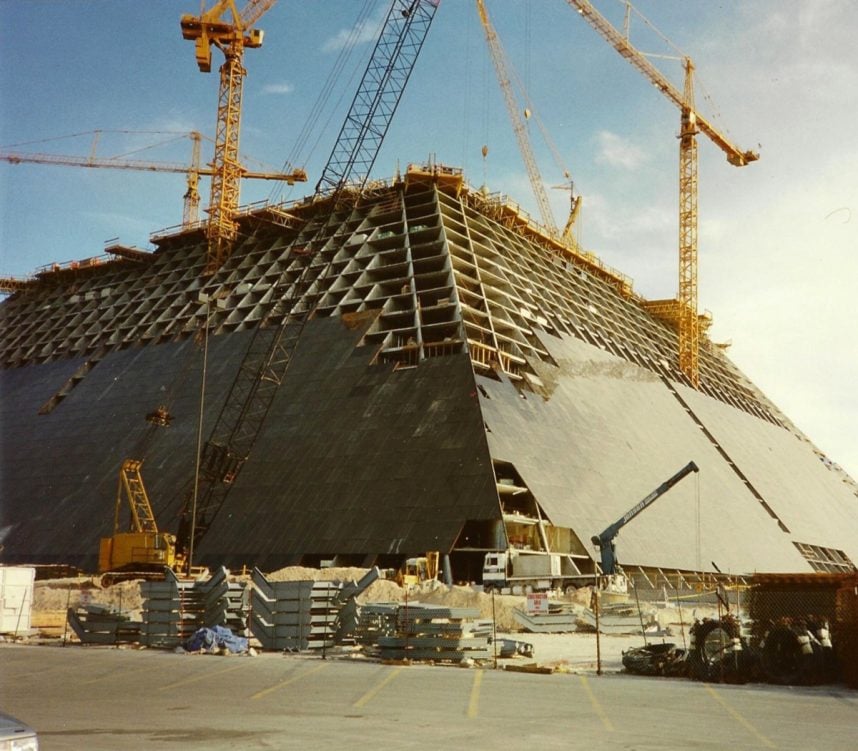
Another likely origin of the sinking Luxor myth predates the encyclopedia entry, stemming from a Las Vegas Review-Journal article published on Sept. 8, 2010, titled “Luxor’s Floor Under Review.”
This article reported that Clark County mandated the evacuation of part of the Luxor pyramid’s basement—an office area not accessible to the public—after inspectors discovered two support columns that were partially cast and hidden above drop ceilings. They were not part of the original design.
An engineering assessment concluded that these columns were not bearing any weight, although MGM finished constructing them. County inspectors also identified a “structural issue” relating to the load-bearing capability of the casino level above, which rested on what was described as a “deficient slab.”
In response, MGM reinforced the basement with temporary supports and later implemented permanent solutions. Since then, the Luxor has not faced any risk of subsidence and was never “sinking into a soft spot.”
That said, certain areas of Las Vegas are indeed sinking, which may have contributed to this myth.
Six Feet Below
The U.S. Geological Survey reports that some sections of the Las Vegas Valley have subsided by several feet—up to six in certain locations—since the 1930s, confirmed by satellite measurements (InSAR).
The reason behind this sinking is clear: for many years, more groundwater was extracted than could naturally be replenished. This led to the underground clay and silt layers compressing like a dried sponge. Once these layers collapse, the land situated above them sinks permanently.
This subsidence primarily occurred in “subsidence bowls” scattered across northwest Las Vegas. A notable instance is Windsor Park in North Las Vegas, where significant ground droppage caused residential properties to crack, shift, and eventually be abandoned.
The Strip and downtown areas have not been significantly impacted.
However, there is positive news: InSAR data indicates that the rate of subsidence has markedly decreased since the 1990s, thanks to reduced groundwater extraction and the injection of treated Colorado River water back into aquifers to promote ground stability.
Catch “Vegas Myths Busted” every Monday on Casino.org. Visit VegasMythsBusted.com to delve into previously debunked Vegas myths. Have an idea for a Vegas myth that needs clarification? Email [email protected].