


Date of Posting: March 16, 2026, 07:21h.
Updated on: March 16, 2026, 01:54h.

- In contrast to allegations made by the New York Times, the Mirage’s golden windows contained no actual gold
- They were merely treated with inexpensive metal oxides
- Vital Vegas verified that the salvaged windows hold no worth, putting to rest a longstanding myth
Recently, we received a message from our colleague and friend Vital Vegas. It kicked off with: “DON’T BE ANGRY!” Knowing him, this could either mean he outsmarted us in our myth-busting show or is romantically involved with our spouse. Sadly, it turns out to be the former.
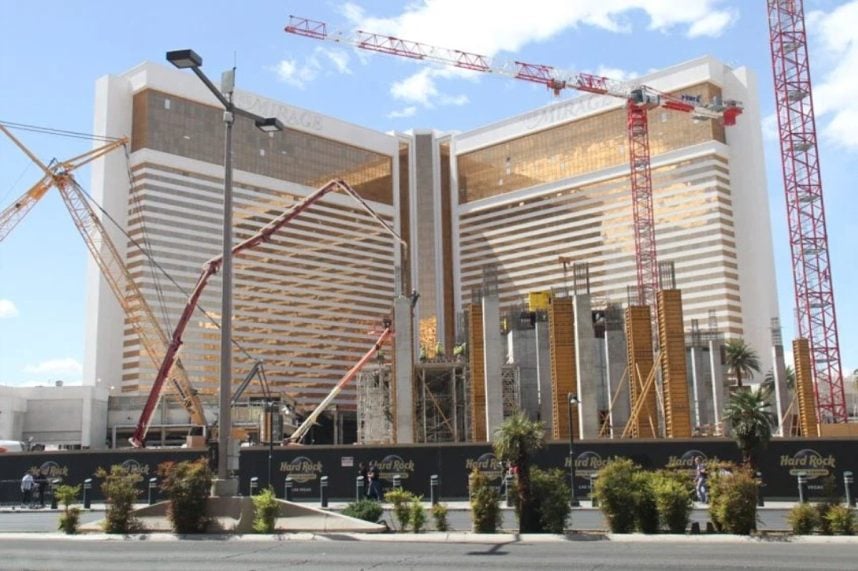
Just joking. While we would have loved to debunk the myth surrounding the Mirage’s “18 karat gold-glazed” windows, like many others, we never saw a need to question the assertion. It was reported and echoed so frequently that it solidified into fact — much like the idea that Las Vegas is the most illuminated spot on Earth from space. (For the record, we did not choose this example to pat ourselves on the back for debunking it; probably.)
We may be frustrated with ourselves, but not with Vital Vegas. We’ve dismantled multiple myths in this series, only because he had already tackled them before we even came on board at Casino.org — notably, the myths about casino carpets designed to manipulate gamblers, the alleged “crazy boy” found in the Crazy Girls statue, and the other one concerning fraudulent gold — the nugget displayed at the Golden Nugget.
In terms of repurposing Vital Vegas insights, we’re no better than the Las Vegas Review Journal — except that we do credit his ideas instead of claiming them as our own.
According to Vital (we’re on first-name terms), he was unaware the gold windows were a myth either. Given gold’s market price exceeding $5,000 an ounce and the Hard Rock having already removed the Mirage’s windows, he simply aimed to report on how much the gold dust would yield if melted.
That’s when he received the shocking reply that astonished him, us, and everyone else: “We could not validate any material value.”
Understanding the Myth
The phrase we used earlier, “18 karat gold-glazed,” hailed from the earliest mention of the Mirage’s windows we’ve tracked down — the Oct. 21, 1990 edition of the New York Times Magazine. And the Gray Lady isn’t renowned for fabricating facts. It’s likely that the publication depended on information from a press release sent out by Steve Wynn’s Golden Nugget Inc. (If copies of that press release still exist, they are likely locked away in filing cabinets somewhere, not available online.)
This is not intended to excuse the Times for any inaccuracies it has ever published. However, even if a fact-checker tried to confirm the windows’ golden status with Guardian Industries — the manufacturer — Guardian would likely have been aware of Golden Nugget Inc.’s false claim and, without a doubt, would have misrepresented the truth to defend it. (Unless threatened by criminal actions or civil suits, why would any corporation prefer honesty over defending a significant client?)
Not All That Glitters
Applying a genuine 18k gold tint to roughly 300,000 square feet of glass was technically feasible back in 1988-89. It would have necessitated an imperceptible layer around 30 nanometers thick. At that time, the raw gold would have set one back approximately $150,000 (around $390,000 today — which is the figure you were looking for, Vital Vegas, before you stumbled upon the even more stunning one.)
While Steve Wynn could certainly have afforded that expense, why would he when he could mislead everyone for 80% less? That’s how billionaires accumulate their wealth!
To achieve their golden sheen — along with the high energy efficiency required to prevent the windows from roasting high rollers like chicken on a spit — the Mirage’s windows were actually layered with numerous coats of metal oxides. These reflective coatings were the benchmark for high-performance skyscrapers of that era.
They were applied using a technique known as magnetron sputtering, which involves blasting plasma gas to remove atoms from a metal source — likely titanium and/or stainless steel — onto glass within a vacuum chamber.
And you thought this was merely an article about a better piece? You just learned about magnetron sputtering. Vital Vegas never taught you that, did he?
Pain in the Glass

Vital Vegas’ blog post regarding this myth — which he sweetly referred to as a “legend” to save our feelings! — also labeled us as “the undisputed monarch of Las Vegas myth-busting.” And that’s probably the primary reason we can’t harbor any resentment toward him.
Not even our own mother has ever paid us such a flattering professional compliment. In reality, she doesn’t even read these columns and would have taken more pride if we had attended law school as we promised her back in college.
Catch “Vegas Myths Busted” every Monday on Casino.org. Don’t forget to visit VegasMythsBusted.com to explore previously debunked Vegas myths. Do you have a suggestion for a Vegas myth that deserves debunking? Contact us at [email protected].