


Published on: September 1, 2025, 07:21h.
Updated on: August 29, 2025, 10:43h.

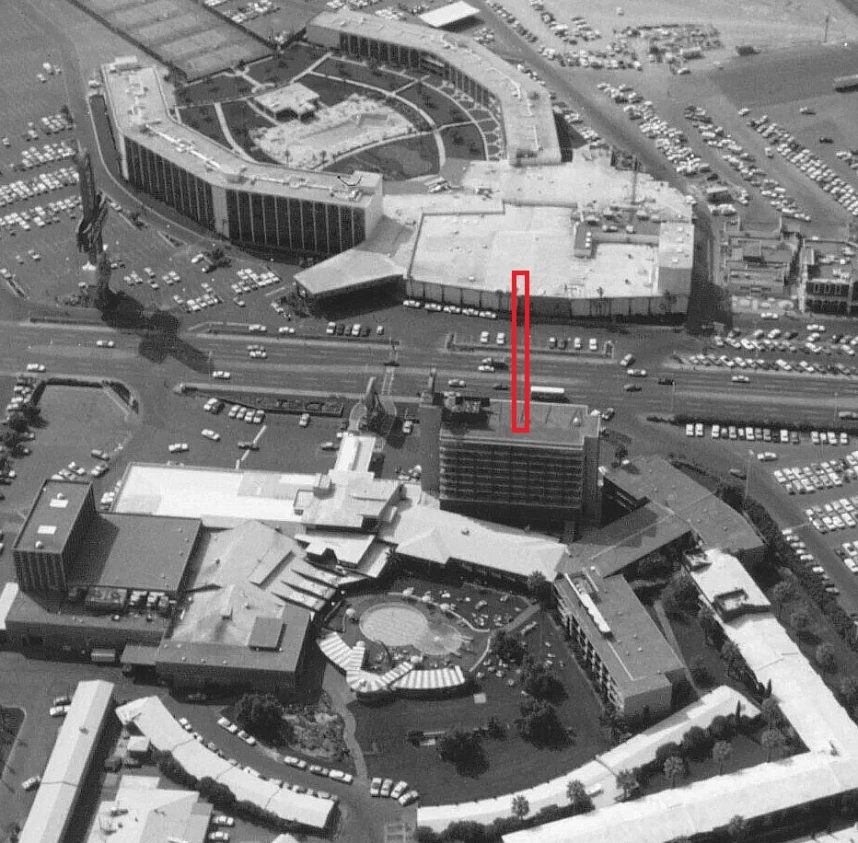
After acquiring both the Desert Inn — his residence from late 1966 to late 1970 — and the Frontier in 1967, billionaire Howard Hughes reportedly commissioned a secret tunnel beneath Las Vegas Boulevard, allowing him to travel discreetly between the two locations.
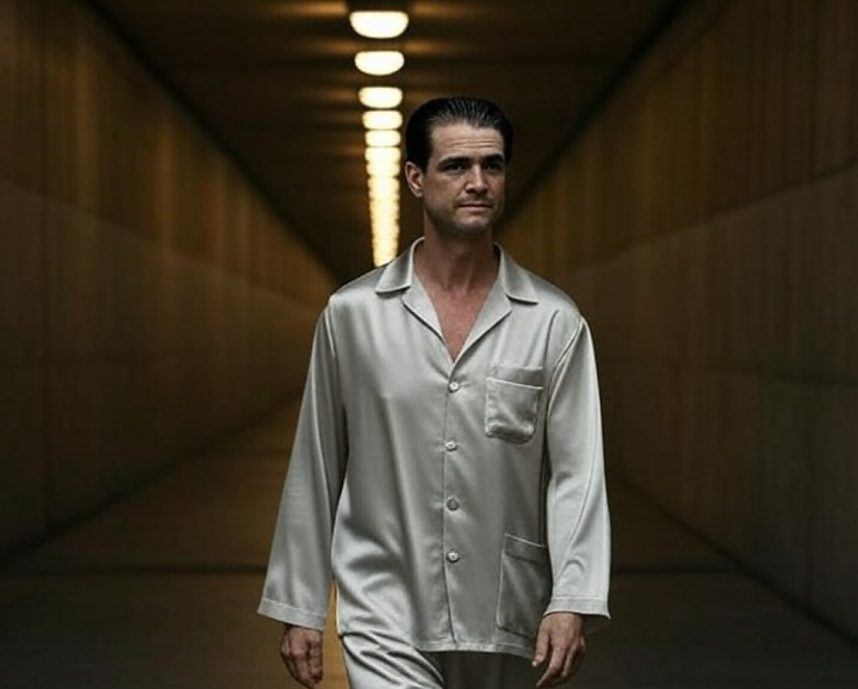
While delving into the story’s origins, we initially suspected it might be a mix of Hughes’ enigmatic nature and the Desert Inn Road Super Arterial.
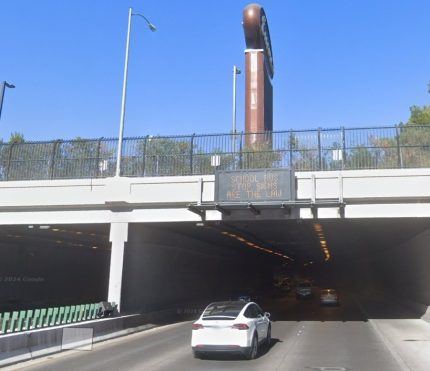
Known for his reclusive and paranoid behavior, Hughes did modify his surroundings for greater secrecy, including sealed-off floors and limited elevator access at the Desert Inn. Additionally, the arterial features a genuine tunnel, established in 1996, which allows Desert Inn Road to pass beneath the Las Vegas Strip to ease traffic.
However, we were unprepared for the surprising finding — a secret about Hughes’ time in Las Vegas that we had never encountered before.
Tunnel Vision
The tale of Hughes’ hidden tunnel was allegedly first brought to light by a Las Vegas legend who regularly performed at both the Desert Inn and Frontier. In a 2012 Tripadvisor thread about the tunnel, a user named @vegasallan claimed, “Wayne Newton says he used” the tunnel.
However, a meticulous review of all of Newton’s interviews and his 1994 memoir shows no mention of this claim.
A substantial underground passage beneath Las Vegas Boulevard would have necessitated permits and excavation documents — none of which can be found.
So, why does this myth endure?
The True Story
At 94, Paul B. Winn is the last surviving member of Hughes’ close-knit circle. He was Hughes’ director of corporate records from 1957 until Hughes’ death in 1976 and previously debunked the myth that his boss bought the Silver Slipper just to dim its sign for a good night’s sleep at the Desert Inn.
When we brought up the secret tunnel story to Winn, we were taken aback by his response.
Winn shared that Bill Gay — who became president of Hughes’ Summa Corporation after Robert Maheau’s ousting in 1970 — “actually did explore the idea of constructing a bridge between the Desert Inn and the Frontier.”
This would have been the first pedestrian bridge crossing the Las Vegas Strip but was not intended as a secret. It was designed for public access.
“They wanted it broad enough to accommodate slot machines so that people could gamble as they walked across,” Winn remarked to Casino.org.
Over time and countless retellings, the bridge concept likely evolved into the notion of a secret tunnel, which aligns more closely with Hughes’ enigmatic persona.
But why was the bridge ultimately not constructed?
“It was deemed unfeasible because Las Vegas Boulevard was categorized as a federal highway at that time, and thus a bridge was prohibited,” Winn explained.
US Route 91 wouldn’t be decommissioned until 1974 with the completion of Interstate 15. The first pedestrian bridge covering the Strip, linking the MGM Grand and New York-New York, opened in 1995.
And that’s how this legend likely originated.
Look for “Vegas Myths Busted” every Monday on Casino.org. If you have a Vegas myth that needs debunking, send an email to [email protected].