


Published on: February 14, 2026, 10:12h.
Updated on: February 14, 2026, 10:12h.

- Virginia Senate has approved a bill to regulate skill games.
- Governor Abigail Spanberger expresses caution regarding further gambling growth in the state.
This week, Virginia’s legislative body voted 24-15 in favor of a bill aimed at establishing a framework to regulate skill games.
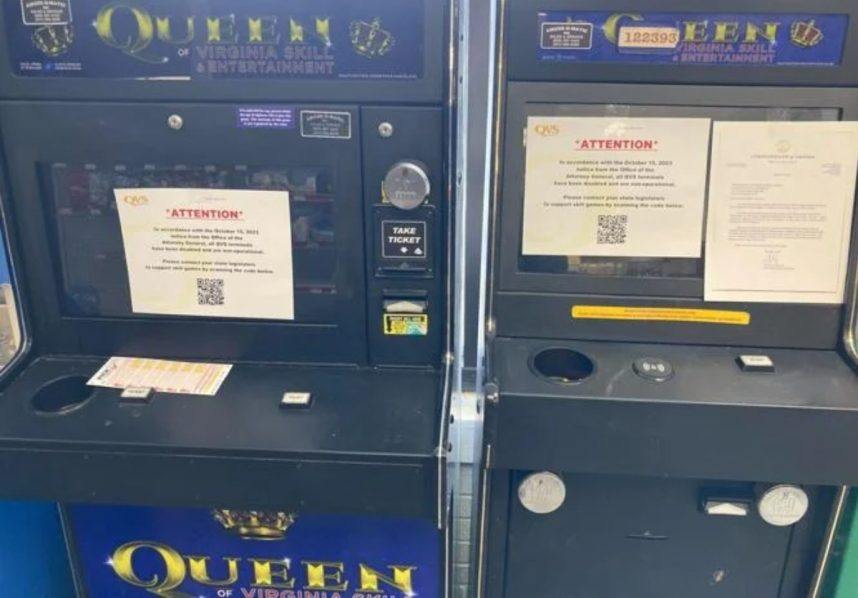
Skill games, resembling slot machines, have played a crucial role in assisting numerous small enterprises during the COVID-19 pandemic. Revenue generated was shared among the game developers, distributors, and local business venues.
Opponents argue that these machines endanger communities by promoting gambling addiction, financial distress, and heightened crime rates.
The proposed Senate Bill 661, known as the Virginia Small Business Economic Development Act, aims to set standards for these contentious games, which were banned in the state since late 2023.
Virginia had temporarily sanctioned skill games during the pandemic to boost additional income for small establishments like bars and restaurants. This allowance ended in June 2021, but a court injunction allowed the games to continue until their legality was ruled against in October 2023.
Overview of the Virginia Skill Games Bill
Sponsored by Sen. Aaron Rouse (D-Virginia Beach), SB661 is designed to introduce regulatory and tax measures for skill games.
The legislation mandates a monthly gaming tax of $800 for each machine positioned at a licensed host business. The Virginia Alcoholic Beverage Control (ABC) Authority will oversee these regulations.
The revenue generated from the Virginia skill games tax will support the Virginia Small Business Economic Development Fund. Of this revenue, 75% will go to the General Fund, 15% will be allocated to the locality where the gaming establishment is located, 6% earmarked for ABC’s regulatory expenses, 2% for the Problem Gambling Treatment and Support Fund, 1% directed to the Gaming Enforcement Office of the State Police Department, and 1% destined for local law enforcement efforts.
Players’ maximum wager would be limited to $5, with a cap of $5,000 on single-game payouts.
To secure a distribution license for skill games, companies will incur a fee of $250,000 annually. Host businesses will be charged $1,000 per year, while truck stops will pay $2,500 annually.
Governor’s Reservations About Expanding Gambling
Governor Abigail Spanberger (D) aims to temper Virginia’s rapid proliferation of gambling that has surged since 2020. Once a state with restrictive gaming laws, Virginia has embraced commercial casinos, online and retail sports betting, as well as historical horse racing machines over the past five years.
Although supportive of establishing a state gaming commission, Governor Spanberger is reportedly wary of expanding gambling formats further.
“Governor Spanberger is profoundly concerned about any conversations surrounding expanded gaming in Virginia without first setting up a unified entity that possesses clear authority, consistent oversight standards, and robust compliance capabilities,” stated Katie Frazier, whom Spanberger appointed as secretary of agriculture and forestry in December, during her testimony before the General Laws Committee on February 10.
SB661 proposes a limit of 35,000 skill games operating within Virginia. Before the ban was enacted, approximately 90,000 unregulated skill gaming machines existed in the state.