


Published on: June 9, 2026, 05:17h.
Updated on: June 9, 2026, 05:33h.

- England supporters show restrained optimism for the Three Lions
- Betting appetite for Portugal reveals substantial home-team favoritism leading to the World Cup
- Spain’s betting landscape shows surprising logic, despite being pre-tournament favorites
As the 2026 FIFA World Cup approaches, set to kick off in Estadio Azteca, Mexico City, within two days, sportsbooks and forecasting services predict a significant increase in betting activity, with estimates suggesting US betting volume could surpass $4 billion.
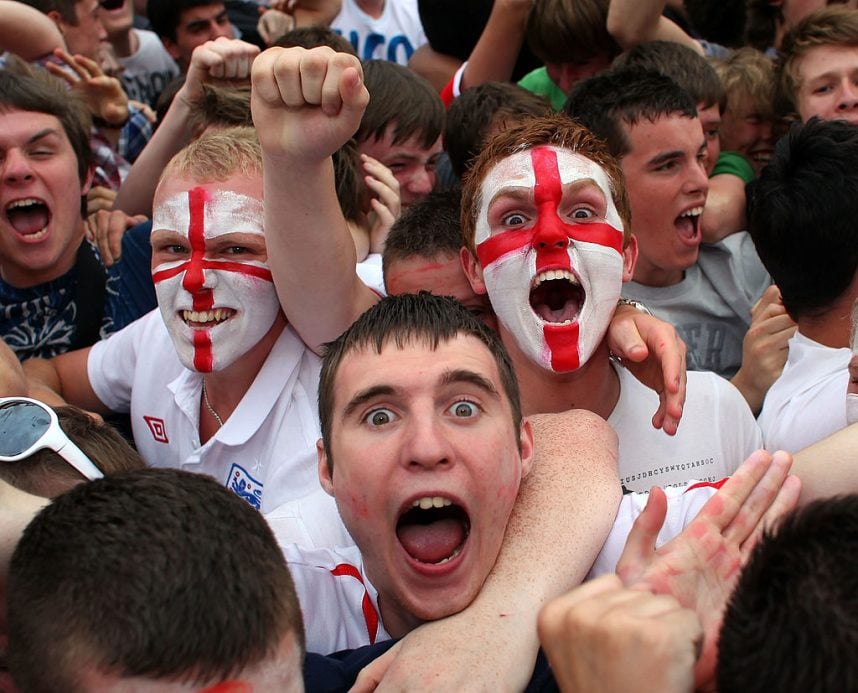
Data released by Entain regarding outright-winner bets suggests that sports bettors might be advancing in their approaches—potentially becoming less influenced by national pride.
Entain’s “Patriotic Punter Index” examines the extent to which fans from various countries support their home teams.
During sporting events, sportsbooks often face the challenge of “home-team bias,” where bettors tend to overrate the teams they support, thus leading sportsbooks to modify odds below the teams’ actual probabilities.
Classic cases include England at major tournaments, Manchester United in the Premier League, and the Dallas Cowboys in the NFL.
This scenario results in sportsbooks carrying extra risk due to fan-driven betting, although international operators can often balance this risk as home-team biases fluctuate from one market to another.
A Shift in England’s Fan Betting Patterns
Having won the World Cup in 1966, England has spent decades failing to meet expectations, although recent tournaments have seen a resurgence in their performance.
England’s betting market is notorious for home-bias, characterized by a vast fan base and robust betting culture.
With a genuine chance of success, England enters the World Cup with a highly engaged public that may subconsciously believe that their bets can influence outcomes.
Behavioral economics supports the view that individuals often overestimate the likelihood of favorable outcomes they desire to see.
This year, however, a more cautious attitude is observed, with only 20% of bettors supporting their team for victory according to Entain, a stark contrast to the 50% figure seen in previous World Cups.
During the 2018 tournament, betting on England surged dramatically. By the semi-finals against Croatia, their liability was at heights never seen before, mainly attributed to a flood of patriotic bets.
This year’s statistics suggest a shift towards a more analytical perspective among bettors—noting that a certain degree of home-team bias continues, as England is currently the third favorite to win the World Cup at odds of 8/1, reflecting an implied probability of around 11% compared to 20% of actual bets.
Portugal Leads in National Pride
Portugal, the sole favorite yet to clinch a World Cup title, shows significant patriotic betting behavior, with 57% wagering on their victory, despite an implied probability closer to 10%, according to Entain.
In the U.S., bettors exhibit a more pragmatic stance, with only 6% supporting their team—though this might also signify optimism, as sportsbooks list USMNT at 70/1 to win, corresponding to just a 1.4% chance.
Interestingly, Spain, viewed as favorites, captures only 16% of domestic bets, aligning almost perfectly with their implied winning probability.
This could be due to the particularities of Entain’s offerings, possibly failing to encapsulate the full spectrum of the Spanish betting demographic, especially considering the popularity of brands like Ladbrokes and Coral among British expats in Spain.
If so, this may convey another instance of England fans reluctantly supporting their team against their rational judgment.