


Published on: April 1, 2026, 11:22h.
Updated on: April 1, 2026, 11:22h.

- Jefferies analyst evaluates four potential scenarios where Kalshi might face setbacks in Supreme Court rulings
- He categorizes the risks for Kalshi as “medium,” “high,” and “very high”
- He mentions that the Supreme Court is likely to address prediction market cases in 2027
Crypto.com, Kalshi, Robinhood Markets (NASDAQ: HOOD), and other operators of prediction markets are facing multiple legal challenges at the state level. A resolution might be visible as soon as next year, depending on whether the U.S. Supreme Court (SCOTUS) decides to hear these cases, although the industry could face unfavorable outcomes.
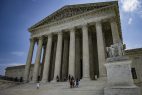
According to a recent analysis from Jefferies analyst David Katz, it is “highly likely” that the Supreme Court will review prediction market cases by 2027, although which case the Court will choose to hear remains uncertain. The firm outlines four scenarios where the Supreme Court could engage with prediction market cases, with most outcomes appearing to favor state regulations. One of these scenarios involves Nevada’s lawsuit against Kalshi, where the state contends that federal preemption does not allow the firm to bypass state gaming laws.
“In this scenario, SCOTUS would assert that even though the CFTC operates as a federal body, its regulatory authority over Prediction Markets does not override the claims from state gaming regulators regarding their jurisdiction over gambling provisions within their borders,” notes Katz.
Referring to the Supremacy Clause outlined in Article VI of the Constitution, the analyst assesses a “medium probability outcome” that if the Supreme Court deliberates on this case, it could side with Nevada. Recently, in late March, Nevada’s First Judicial District Court issued a 14-day restraining order against Kalshi, preventing the yes/no exchange from facilitating sports event contracts in the state.
Challenges from Massachusetts and Ohio for Kalshi
Massachusetts and Ohio are also states taking legal action against Kalshi. In Massachusetts, the primary concern is the legislative intent regarding sports event contracts.
Kalshi, having faced legal hurdles in Massachusetts, may invoke the “Chevron principle” to argue that the Commodities Futures Trading Commission (CFTC) possesses the authority to interpret the Commodities Exchange Act (CEA) in various ways. This could potentially allow sports event contracts to be authorized; however, SCOTUS might interpret these matters differently.
“However, the 2024 SCOTUS decision in Loper Bright Enterprises v. Raimondo invalidated the Chevron principle, reestablishing the interpretive authority within the Judicial Branch concerning Congressional Intent,” Katz points out. “Given this shift, it is plausible that SCOTUS could conclude that Congress did not intend for sports to be included under the framework of swaps as defined by the CEA.”
The analyst suggests a “high probability” that if the Supreme Court reviews the Massachusetts case, it would likely rule against Kalshi.
In Ohio, the focus of the lawsuit against Kalshi largely revolves around how a swap is defined. The key issue relates to the economic implications of parlays, player propositions, and other sports contracts that extend beyond a simple yes/no outcome for a game or which team progresses to the Super Bowl.
“When considering player prop bets, over/unders, point spreads, parlays, etc., SCOTUS could find it easy to dismiss these bets as commercially insignificant,” asserts Katz. “This argument is probably derived from the Ohio v. Kalshi case, given that Judge Morrison of the Southern District of Ohio has already determined that the results of sports games do not directly impact commerce or commodity values, thereby enabling Ohio’s cease and desist order against Kalshi to take effect.”
According to the Jefferies analyst, there is a “very high” probability that if the Supreme Court hears the Ohio v. Kalshi case, it will favor the state.
Potential Success for California Tribes
Due to the assertion that prediction markets undermine tribal sovereignty, various tribal casino operators are actively seeking legal recourse against yes/no exchanges, claiming exclusivity to manage gaming on their territories under the Indian Gaming Regulatory Act (IGRA) of 1988.
The California Nations Indian Gaming Association (CNIGA) stands out as a vocal opponent to Kalshi; Katz indicates that cases filed by several tribal operators in the state are likely to bring up IGRA considerations, which could prompt SCOTUS to take these cases.
“We believe that a legal argument surrounding tribal sovereignty and gaming will emerge as a formidable hurdle for Prediction Market operators, and anticipate that if this matter reaches SCOTUS, a ruling requiring Prediction Markets to geo-fence around tribal lands is quite probable,” asserts the analyst.
He assigns a “very high” probability that if the Supreme Court hears the California case, it will side with the tribes.