


Published on: April 8, 2026, 02:34h.
Updated on: April 8, 2026, 02:34h.

- Recent legislation in Ohio poses a threat to online sports betting
- The “Save Ohio Sports Act” faces significant challenges
- Ohio boasts a thriving and lucrative sports betting market
In 2021, sports betting was legalized in Ohio when Governor Mike DeWine (R) ratified House Bill 29, allowing both online and in-person wagering at casinos, racinos, sports venues, and local establishments.
Ohio’s sports betting landscape is one of the most significant in the nation, with over $10.3 billion wagered last year, resulting in gross revenues exceeding $1 billion. The state’s tax revenue from this sector amounted to nearly $210 million.
Governor DeWine and others argue that the economic benefits do not justify the social repercussions. He has referred to the signing of HB29 as one of his most regrettable decisions.
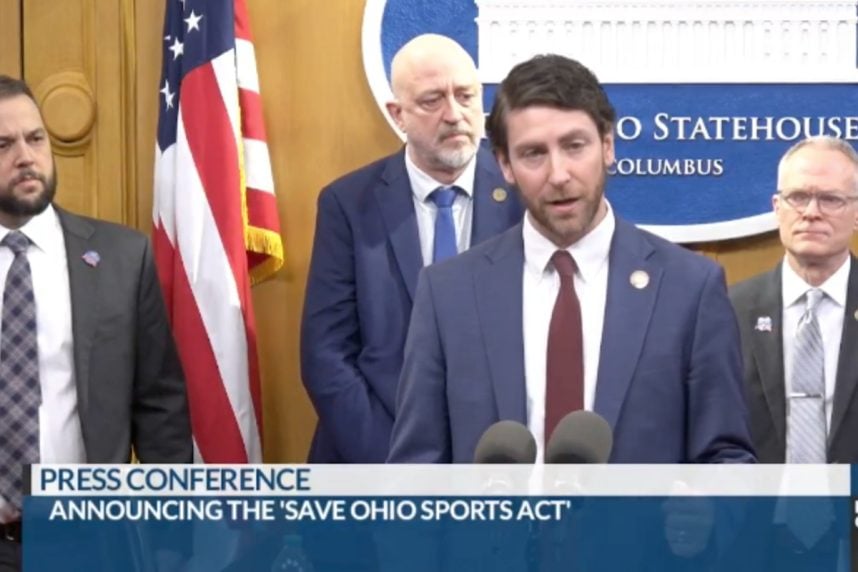
DeWine is not alone in expressing regret over sports betting. State Representatives Riordan McClain (R-Upper Sandusky), Gary Click (R-Vickery), Jonathan Newman (R-Troy), and Kevin Ritter (R-Marietta) have put forth a proposal that would strip consumers of their right to place online sports bets.
“Attempting to watch a game nowadays means being bombarded by gambling ads and promotions, especially those focused on ‘winning.’ The stark truth is that most bettors lose,” McClain stated.
A mere 5% of bettors are actually profitable, and those who do win are often swiftly identified and restricted by betting companies. This has profound implications for Ohio families, as the funds lost to gambling are taken from their resources,” McClain elaborated.
Both McClain and Click, initially a part of the Ohio House in 2021, had opposed HB29. The respective Senate and House votes were 72-13 and 31-1.
‘Save Ohio Sports Act’ Overview
The proposed Save Ohio Sports Act aims to confine sports betting to the state’s four commercial casinos, revoking online and retail sportsbook rights from the seven racetrack casinos. Additionally, placing bets at restaurants and bars through the Ohio Lottery’s UBetOhio Sportsbook would be eliminated.
The limitations extend further. The Act proposes a cap of $100 per wager and restricts customers to a maximum of eight bets in a 24-hour period. Furthermore, in-game betting, proposition and parlay bets, as well as wagers on college sports, would be entirely prohibited due to concerns about potential match-fixing.
“As a fan, I envision a future where I can enjoy watching elite athletes compete without the influence of gambling. I want the result to be determined on the field, not driven by betting markets,” McClain emphasized.
This legislation is backed by various advocates for gambling reform, including the Center for Christian Virtue.
Is a Ban on Ohio Online Sports Betting Possible?
Repealing a previously legalized industry poses significant challenges and raises legal questions regarding constitutional rights safeguarded by the Ohio Constitution.
Ohio’s gaming sector also includes some of the largest names in the industry, such as MGM Resorts, Caesars Entertainment, Hard Rock International, Penn Entertainment, and Jack Entertainment—multibillion-dollar corporations with extensive lobbying power.
The repeal of the current sports betting law is likely to encounter significant public resistance as well.