


Published on: April 12, 2026, 07:02h.
Updated on: April 12, 2026, 07:02h.

- Texas drops money laundering investigation but retains $2M in seized assets
- Officials assert poker club breached Texas gambling regulations
- Players unpaid as The Lodge closes indefinitely
Officials in Texas have decided to discontinue a money laundering investigation involving The Lodge Card Club, the state’s largest poker venue located in Austin. However, they maintain that the club may have breached gambling laws in Texas.
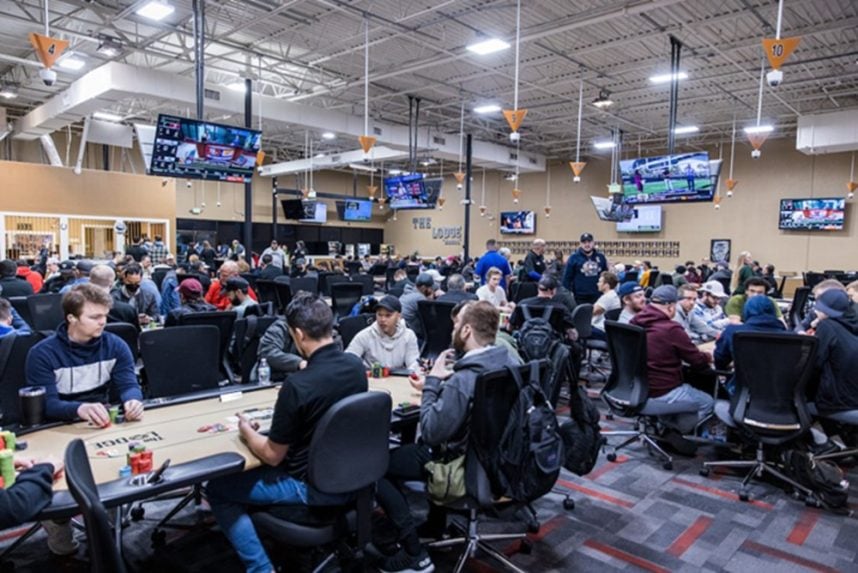
An April 8 search and seizure warrant submitted to the 480th Judicial District Court in Williamson County provides insight into the authorities’ justification for retaining around $2 million in seized funds, despite no formal charges being brought forward.
The document alleges that when The Lodge was raided by the Texas Alcoholic Beverage Commission’s (TABC) Financial Crimes Unit on March 10, it was operating against Texas Penal Code Sections 47.03 and 47.04, which outlaw the promotion of illegal gambling and maintaining a gambling establishment.
As of now, no arrests have been made, and the investigation is still active. The warrant hints at the possibility of illegal gambling charges being filed against the club, co-owned by celebrity poker player Doug Polk, which has remained closed since the raid.
On the morning of March 10, players present reported that law enforcement entered the facility and instructed them to leave, preventing them from cashing out their chips.
Polk later referred to the raid as a “witch hunt” on social media, assuring players they would be reimbursed.
Possible Legal Loophole?
Until recently, locating a game of hold’em in Texas was challenging outside the Kickapoo reservation on the Mexican border. However, in recent years, numerous poker rooms have emerged throughout the state—in cities like Austin, Dallas, Houston, San Antonio, and Lubbock—operating in a legally ambiguous environment.
The Texas Penal Code 47.04 states that there is a “defense to prosecution” if “the actor engaged in gambling in a private location [including a club]; no individual received any economic gain beyond personal winnings; [and] aside from the benefit of skill or luck, the risks of losing and the probabilities of winning were equal for all.”
The clubs assert they function as private establishments, avoiding taking a cut from each pot. Instead, they claim to generate income by charging players an hourly fee, maintaining compliance with state laws.
Economic Incentives
Nevertheless, the search and seizure warrant indicates that authorities in Williamson County dispute this claim. The filing states that the club’s owners have been benefiting economically by “imposing membership and seating fees for individuals participating in gambling” and by “offering food, beverages, alcoholic drinks, merchandise, live-streaming poker games, and organizing poker tournaments.”
This business model mirrors those of other clubs across Texas that remain operational—for the time being.
The legality of this business model may eventually be evaluated by the Texas Supreme Court. For the moment, The Lodge’s prospects appear grim. The club laid off its staff in late March and announced it would stay closed for the “foreseeable future.”