


Published on: April 14, 2026, 09:12h.
Updated on: April 14, 2026, 09:12h.

- In a CBC interview, former MP Brian Masse criticized the hurried launch of igaming in Canada
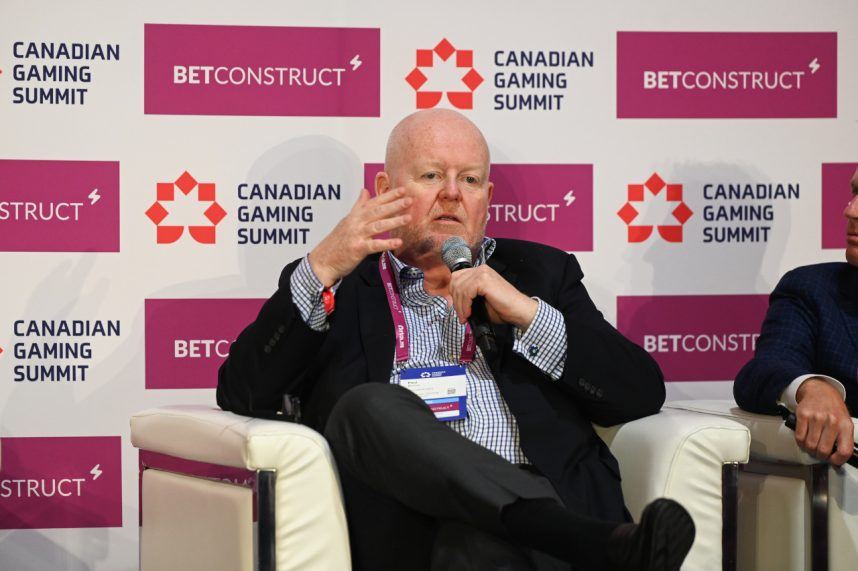
- Canadian Gaming Association’s President & CEO Paul Burns shares his perspective in an interview with Casino.org
- The number of licensed igaming operators in Ontario has reached 48
Recently, former NDP MP Brian Masse, who notably introduced a private member’s bill aimed at lifting the ban on single-event sports betting in 2019, expressed his discontent to CBC News, stating that the execution of this initiative in Canada has been “undesirable”.
$4 Billion in Revenue
One year following Masse’s initial bill proposal, Conservative MP Kevin Waugh reintroduced it, leading to its passage as Bill C-218 in 2021.
Masse has raised alarms regarding the degree to which the private sector currently controls igaming, particularly since the competitive market in Ontario was launched in April 2022. He noted that the rollout was executed at “full throttle” and suggested that a more cautious approach, managed by the Ontario Lottery and Gaming Corporation, would have been preferable.
Masse’s concerns escalated with the recent news that BetNova, an online casino and sportsbook operator, has launched in Ontario, raising the total number of licensed igaming operators in the province to 48, despite some operators like Rivalry exiting the market over the past year. iGaming Ontario reports that the province’s open market amassed over $4 billion in revenue in 2025.
Additionally, Masse has voiced apprehensions regarding the surge in gambling advertising across Canada and supports Senator Marty Deacon’s bill that aims to restrict sports betting advertisements nationwide. In a discussion with Casino.org, Paul Burns, President & CEO of the Canadian Gaming Association, provided his insights on Masse’s remarks.
Player Protection
“Canadians have continuously spent money online on sports betting with no regulated Canadian alternatives, prompting this debate,” remarked Burns. “The momentum for online gaming has never waned. The U.S. adjustments in 2018 certainly increased visibility and advertising.”
Each province in Canada has the autonomy to carve its own path in regulating online gaming.
“Ontario has been forthright in outlining their objectives prior to entering the online gaming landscape,” he commented. “It was about ensuring consumer choice, acknowledging where the public was playing. It also prioritized consumer protection, which they have effectively achieved, arguably establishing the leading regulatory framework in North America, if not globally, for safeguarding players. I believe Brian hasn’t fully recognized that.”
Unregulated Market Growth
Burns highlighted that Canadians have had access to online gaming and sports betting for the last 25 years, with the unregulated market still on the rise.
“Ontario made a strategic choice based on the enormity of its market, and their approach to opening it, bringing numerous sites and operators into the fold, has undoubtedly provided Ontario players with ample options,” Burns noted.
“A staggering 86% of the play in Ontario occurs outside of the black market, which starkly contrasts with the situation in the rest of Canada. While people may have concerns about advertisements… these promotions are from companies that are licensed and regulated, held to rigorous standards that ensure strong consumer protection. These platforms have player exclusion features and adhere to fair gaming practices. Yet, Canadians still seek out sites devoid of these protections, lacking player self-exclusion options and, in certain instances, age verification. The focus should be on tackling this issue instead of fixating on a few television commercials from regulated entities.”
Misconception
In essence, the igaming industry has already surged ahead, with unregulated options continuing to thrive in Canada, which Burns believes is where attention should be focused.
Masse has mentioned all the “unregulated” activities within the igaming sector, which Burns contends is a misconception when considering Ontario’s channelization rate (86%).
“It’s crucial for provinces to develop regulatory frameworks tailored to their specific environments to enhance player protection. They must decide how best to implement this, whether through an Ontario-style model or another approach that better caters to their unique circumstances,” Burns stated.
Alberta is set to launch its market on July 13, and Burns confirmed that other provinces are also contemplating a more serious approach.
Modernize the Criminal Code
“Ontario achieved many positive outcomes, while there are areas needing improvement,” he noted. “Everyone can learn from these experiences to build upon and enhance the system.”
Burns also emphasized the necessity for amendments to the Criminal Code to better safeguard the market against illegal operators advertising on social media.
“Why does the issue of the gray, unregulated market in Canada persist after 25 years?” he asked. “It’s because there’s a lack of definitive language within the Criminal Code. Perhaps it’s time to rectify that. Regulatory frameworks cannot remain static, and neither should laws; they must evolve. Ottawa would benefit from focusing on providing provinces with the tools they require rather than addressing television advertising.”