


Published on: April 15, 2026, 11:03h.
Updated on: April 15, 2026, 11:03h.

- Bernstein predicts prediction markets will see a turnover of $1 trillion by 2030
- Kalshi and Polymarket’s trading volume has already surpassed 2025 figures this year
- Analysts assert legal challenges will not hinder industry expansion
The prediction market sector is witnessing unprecedented growth this year, with projections indicating it could reach an astounding $1 trillion in annual turnover by 2030.
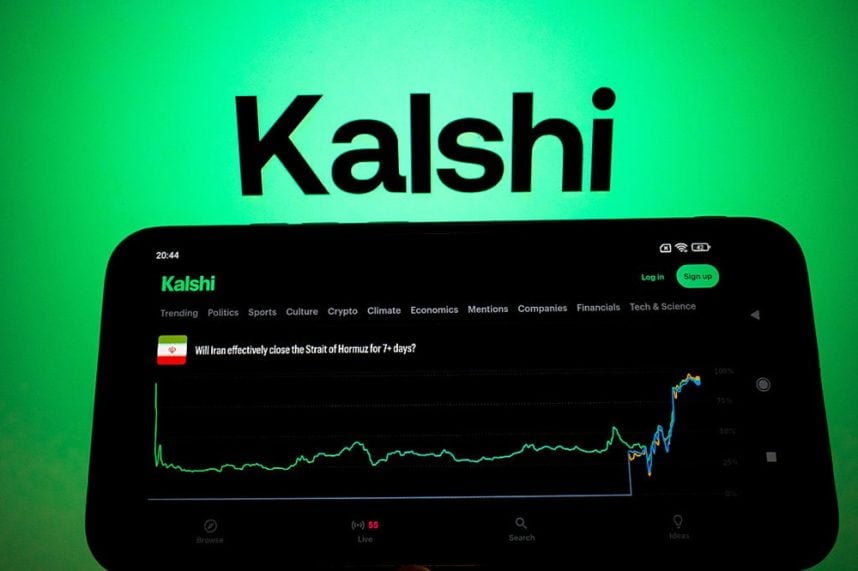
This optimistic outlook comes from Gautam Chhugani, an analyst at Bernstein, who suggests that yes/no exchanges are set to achieve a volume of $240 billion in 2026. This projection arrives shortly after a Bank of America report anticipated that prediction markets could escalate to $1.1 trillion in annual activity. Chhugani emphasizes that a rise in participation from professional traders will significantly boost prediction market volumes.
“We anticipate the institutional market will evolve around contracts related to economics, business, and politics, as investors seek straightforward and precise access to events,” the analyst states. “We also foresee an increase in hedging requirements from businesses and insurance companies dealing with event-specific risks.”
The analyst estimates that contracts related to sports events comprise over 60% of current industry turnover — a relatively low figure compared to other estimates — but he predicts this percentage could decrease by half by 2030, which is advantageous for platforms like Kalshi and Polymarket.
Notable Players in the Prediction Market Landscape
As of now, trading volumes on Kalshi and Polymarket have already exceeded their 2025 totals, leading Bernstein to project prediction market revenues could reach $2.5 billion, a remarkable increase from last year’s $400 million. Looking forward, this revenue figure is expected to grow to $10.8 billion by 2030, based on current industry take rates.
Chhugani, like some of his peers, identifies Coinbase Global (NASDAQ: COIN) and Robinhood Markets (NASDAQ: HOOD) as key players poised to benefit from the burgeoning prediction markets.
According to Bernstein’s analysis, Robinhood, which labels prediction markets as its fastest-growing business segment, is generating $350 million in recurring annual revenue through event contracts, which constitute 30% of Kalshi’s turnover.
Coinbase entered the prediction market arena via a partnership with Kalshi last year. Both Coinbase and Robinhood are projected to emerge as significant winners in the expanding prediction market landscape due to their extensive customer bases — many of whom are active traders — alongside their technological and compliance expertise in managing event contracts.
Impact of Regulatory Clarity on Prediction Markets
It’s widely acknowledged that prediction market operators are facing numerous state-level legal hurdles, with some analysts forecasting that resolution might ultimately come from the Supreme Court; however, the timeline remains uncertain.
Meanwhile, the Commodities Futures Trading Commission (CFTC) is engaged in regulatory disputes with states, but Chhugani doesn’t foresee these legal challenges stunting the long-term growth of prediction markets.
“Despite ongoing state-level legal obstacles, we anticipate that platforms such as Kalshi, Polymarket, and public companies (HOOD, COIN) will gain from enhanced regulatory clarity and growing alignment with federal authorities (SEC, CFTC) — essential factors driving market legitimacy and broader acceptance,” notes the Bernstein analyst.