


Published on: April 16, 2026, at 05:07h.
Updated on: April 16, 2026, at 05:23h.

- In the 1930s, William Hill established a successful betting enterprise through telephone and mail credit, deliberately avoiding physical betting venues, which he deemed beneath him.
- Following Hill’s passing in 1971, his company evolved from a niche credit-betting service into a vast retail chain, ultimately becoming the first British bookmaker to penetrate the Nevada market in 2012.
- With its acquisition by Caesars in 2021, the William Hill brand continues as a well-known entity at over 120 locations throughout Nevada, maintaining approximately 10-15% of the state’s betting volume.
William Hill created one of Britain’s leading betting chains yet refused to enter any of his establishments. The man behind a global sportsbook empire viewed walk-in betting shops as unrefined, damaging to the industry’s standing. He was entirely committed to this belief: there is no record of him ever visiting one.
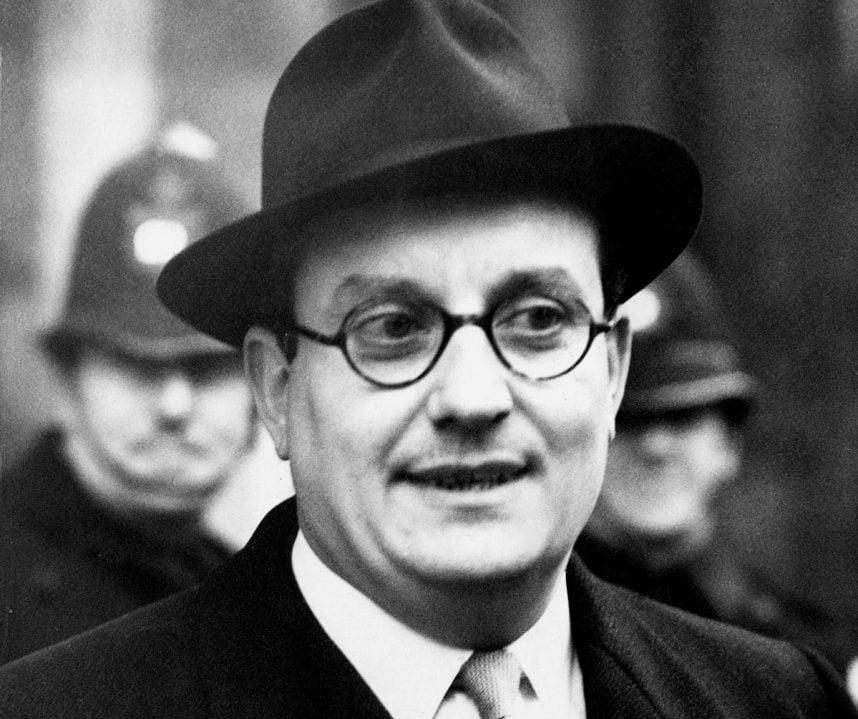
Before becoming a renowned name in the global sports betting industry, William Hill emerged as a self-made entrepreneur who transformed risky and often illegal practices into significant profits.
William the Visionary
Born in 1903 in Birmingham, England, Hill left school at 12 to assist at his uncle’s farm and subsequently worked in a factory. As a teenager, he began accepting illegal off-track wagers, using his motorcycle to collect bets from local workers. By his early twenties, he had relocated to London, establishing a reputation for integrity and sharp odds, initially focusing on greyhound racing before switching to horse racing.
In 1934, he founded his betting enterprise as a credit-based operation, taking bets via mail and phone—an ingenious way to navigate stringent regulations against cash betting away from racetracks. Customers would send their bets with checks to his modest office on Jermyn Street in London’s St. James’s district, with winnings paid out through the mail. Later, he upgraded to a more upscale location in London’s West End.
In 1939, he formally registered his business as William Hill (Park Lane) Ltd.
By tactfully leveraging legal loopholes, Hill amassed a significant credit-betting empire catering to serious gamblers who preferred settling their debts post-event. He was vocally opposed to the concept of walk-in betting shops, even after cash betting shops became lawful in 1961. He famously branded them as “a cancer on society,” arguing they attracted undesirable clientele and tarnished the industry’s image.
Retail Expansion
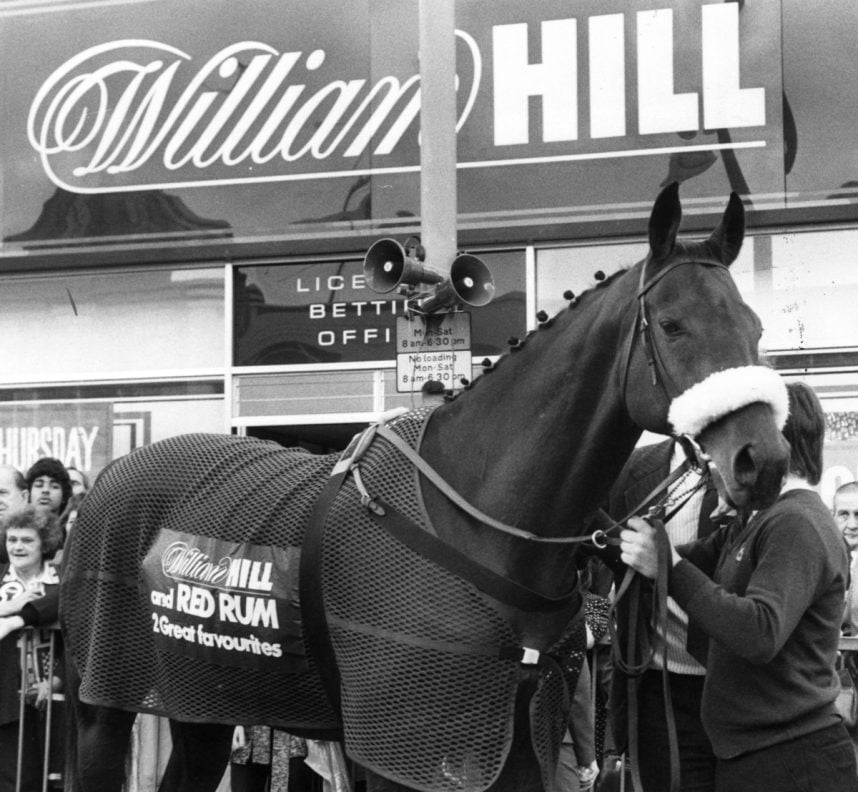
It was only in December 1966 that Hill finally joined the retail sector, somewhat reluctantly purchasing 18 existing betting shops—most located in the West End—from another operator for £825,000 (approximately $2.31 million in 1966). These marked the first establishments to carry the William Hill name.
An intensely private individual, Hill married Ivy Burley, a hairdresser from Birmingham, in late 1923. They welcomed one daughter, Kathleen. Later, while still married to Ivy, Hill embarked on a long-term relationship with Sheila Baker, resulting in the birth of his second daughter, Miranda Baker, in 1961.
Hill stepped back from the business in 1970 and passed away from a heart attack on October 15, 1971, at the age of 68, remaining married to Burley until his passing.
It wasn’t until after Hill’s death and the acquisition of the company by Sears Holdings that William Hill began the expansive growth that led it to be the first British bookmaker to establish a presence in Las Vegas in 2012. The company purchased three existing sportsbook chains—Lucky’s, Leroy’s, and the satellite operations of Club Cal Neva—for around $53 million.
Until 2018, William Hill controlled approximately 50–55% of the sportsbooks in Nevada. Following its acquisition by Caesars in 2021, many of the larger properties were gradually rebranded as Caesars Sportsbook, while the William Hill name persists in over 120 smaller and legacy locations, representing about 10–15% of the state’s overall sports betting volume.