


Published on: April 17, 2026, 06:38h.
Updated on: April 17, 2026, 06:38h.

- EU nations may restrict online gambling regardless of foreign licenses
- Consumers entitled to recover losses from international gambling services
- Ruling restricts market entry for operators based in Malta and Gibraltar
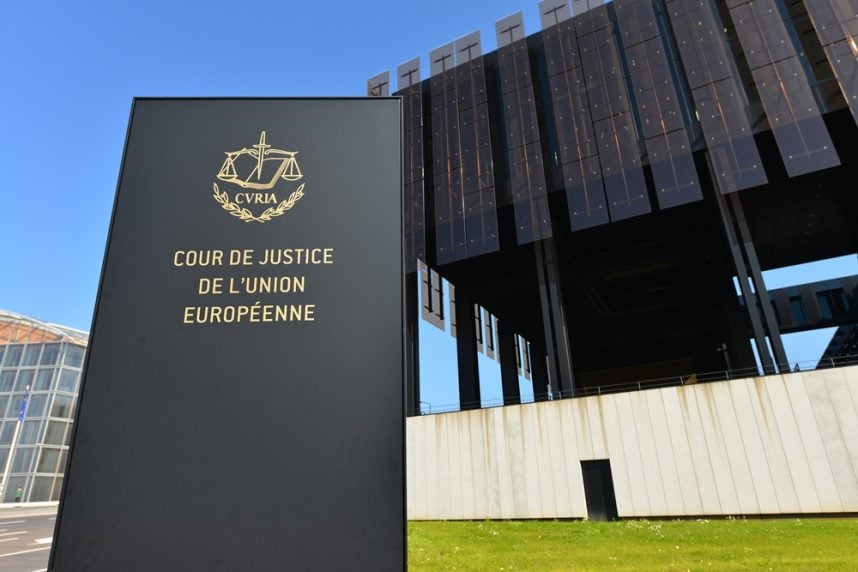
The European Court of Justice (ECJ) has determined that EU regulations do not prevent member countries from banning specific online gambling services, even if those providers hold licenses from another EU member. It also affirmed that consumers can, in principle, pursue civil claims to reclaim losses from operators where such services were prohibited in their home country.
This ruling is expected to raise alarms among gambling operators, as it bolsters the rights of players aiming to recover previous losses. Additionally, it could impact major online gambling locations like Malta and Gibraltar, highlighting that licenses obtained there may not ensure access to the entire European market.
German Player Seeks Compensation for Losses
The case originated from a German player’s losses while betting with two operators licensed in Malta, specifically European Lotto and Betting Ltd (associated with Lottoland), along with Deutsche Lotto und Sportwetten Ltd, between June 2019 and July 2021 when online games of chance were generally outlawed in Germany.
This player initiated a civil lawsuit in Maltese courts as an effort to recover his losses, prompting the court to seek guidance from the ECJ.
The court’s query centered on whether the fundamental EU principle facilitating the free movement of services across the Single Market overrides national laws if an operator is licensed in another member state.
The ECJ concluded that it does not, clarifying that the free movement of services is not an absolute principle.
“EU law does not prevent a member state from prohibiting specific online services authorized in other member states and from imposing civil-law repercussions for that prohibition,” the ruling states.
“Consumers may file claims for the return of lost stakes against operators based in another EU member state when the respective games of chance were prohibited in the consumer’s home country.”
Operator’s Legal Accountability
Furthermore, Germany’s transition in 2021 from a prohibition model to a licensing system does not retroactively validate previous operations. The ECJ emphasized that member states are within their rights to enforce legal consequences stemming from a prior ban, including recognizing contracts as null and allowing players to recover losses incurred during that period.
Additionally, the ECJ refrained from automatically assigning blame to the player. Merely engaging with a foreign-licensed gambling platform, even with awareness, does not constitute an abuse of EU law. Any considerations of intent are the responsibility of the operator, which national courts must evaluate according to domestic rules.