


Published on: May 14, 2026, 11:50h.
Updated on: May 14, 2026, 11:50h.

- Public policy advocates assert that the PAPSA ruling has shifted sports betting to a states’ rights question.
- The organization contends the CFTC aims to oversee sports wagering through prediction markets, sidelining state authority.
- It is “evident” that prediction markets provide sports betting opportunities.
Today represents the eighth anniversary of the Supreme Court’s decision to invalidate the Professional and Amateur Sports Protection Act (PASPA), a landmark ruling that empowered states to determine the legality of sports betting independently. A public policy organization emphasizes that the PAPSA decision underscores state authority, as opposed to the Commodities Futures Trading Commission (CFTC), in regulating sports betting.
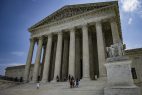
In a recent report by Better Markets, an organization focused on consumer protection within the financial services sector, it asserts that the CFTC is seeking to oversee sports event contracts traded on prediction markets, thereby bypassing state regulations. Better Markets, which has been critical of prediction markets, suggests this circumvention may not be well-received by the Supreme Court.
“When the Supreme Court invalidated the federal law restricting states from legalizing sports betting, it left that decision in the hands of individual states,” commented Better Markets Director of Securities Policy Benjamin Schiffrin in the report. “It’s hard to believe the Supreme Court intended for the CFTC to take on the role of the nation’s sports gambling regulator and to obstruct states from safeguarding their residents.”
This perspective is particularly relevant given the prevailing view that the future of prediction market operators hinges on upcoming Supreme Court hearings related to the matter, with no anticipated resolution before 2027 at the earliest.
CFTC Claims Legal Justification
Recently, the CFTC, acting as the federal overseer for prediction markets, has initiated legal action against multiple states, arguing that these states are overreaching their regulatory power by trying to manage federally regulated derivatives.
Schiffrin highlights that the CFTC is trying to utilize a 2010 legislative framework that conferred regulatory authority over event contracts, yet it was based on the premise these derivatives were primarily for financial market participants as risk management tools. Notably, this legislation included stipulations regarding sports wagering.
“Senator Blanche Lincoln, the architect of this provision, indicated the aim was to prohibit event contracts related to sporting events that would solely serve gambling purposes,” Schiffrin notes. “This legislation directed the CFTC to mitigate the use of event contracts for gambling; it did not impede citizens from betting on sports or restrict states from legalizing or outlawing sports wagering.”
In summary, detractors of prediction markets argue that the 2010 congressional legislation constrains event contracts to legitimate financial or hedging contexts, contending that the CFTC and the prediction market sector are exploiting loopholes to expand betting opportunities, especially in jurisdictions where sports betting remains prohibited.
Insights from SCOTUS on PAPSA
In its 7-2 decision on PAPSA, the Supreme Court recognized the significance of sports betting, though fundamentally, the ruling clarified that unless Congress establishes a unified regulatory standard across the nation, individual states hold the authority to decide.
“The issue of legalizing sports betting is contentious. Proponents claim it could generate state revenue and significantly undermine illegal sports betting operations, often linked to organized crime,” the Court’s opinion stated. “Critics argue that legalizing sports betting may lead to addiction among youth, cause individuals of limited means to deplete their savings, and corrupt both professional and collegiate sports. While the decision to legalize sports betting is a substantial policy question, it is not our decision to make.”
Legal analysts speculate that if the Supreme Court decides to address a prediction markets case, it could spell trouble for the industry, given the current composition of the Court appears to align with states’ rights and tribal sovereignty—issues that the sector has been accused of disregarding.