


Published on: May 19, 2026, 08:18h.
Updated on: May 19, 2026, 08:18h.

- DraftKings is shutting down its sportsbook at Wrigley Field
- The sports betting leader pointed to rising taxes in Illinois and Chicago
DraftKings has announced that its decision to close the Wrigley Field sportsbook was primarily influenced by the continually escalating sports betting taxes imposed in Illinois and Chicago.
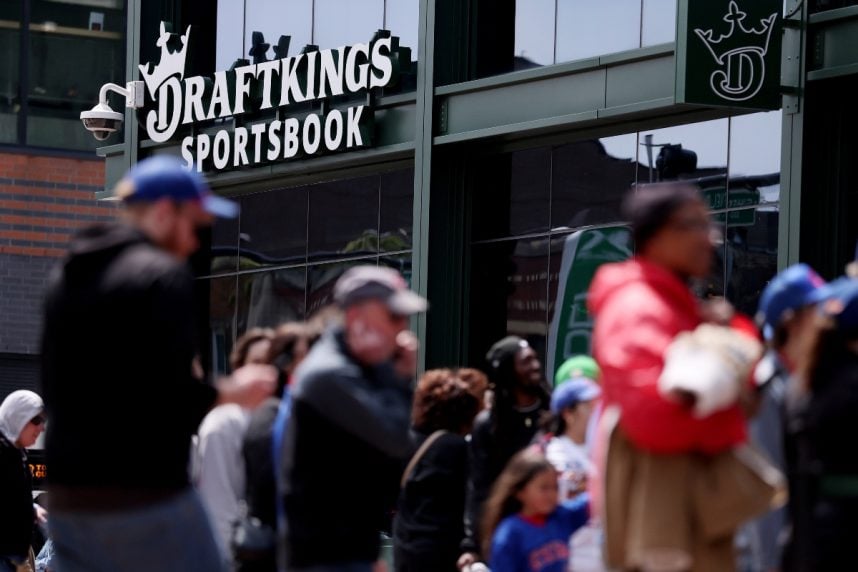
On Monday, DraftKings confirmed that May 31 will mark the final opportunity for fans to place bets in person at the sportsbook adjacent to the famed Chicago Cubs stadium. While the DraftKings venue debuted a restaurant and bar in June 2023, in-person betting only commenced on March 15, 2024.
According to DraftKings, the sportsbook will transform into a sports lounge post-June, though patrons will still be able to place bets using the DraftKings app from within the venue.
The DraftKings location at Wrigley Field can be found at 1012 W. Addison Street, positioned near the right-field corner of the stadium.
Taxation Issues
Illinois is known for imposing one of the most stringent tax systems on both retail and online sportsbooks nationwide.
Sportsbooks are required to pay between 20% and 40% of their gross revenue (the total amount retained after fulfilling winning bets) to the state. The tax rate follows a graduated scale, with sportsbooks earning over $200 million annually facing the highest 40% tax rate.
In addition to the already high state tax rates, sportsbooks faced additional challenges when Illinois introduced a groundbreaking per-bet fee last year. For every bet taken up to 20 million in a calendar year, sportsbooks are charged 25 cents, which rises to 50 cents for any further bets beyond that threshold.
In January, Chicago added a 10.25% tax on the sports betting revenue generated from bettors located within the city limits, which ultimately compelled DraftKings to retract its Wrigley operations.
DraftKings remarked, “The financial burden of maintaining operations in Illinois, coupled with the exorbitant tax structure, complicates our ability to justify ongoing investment in a standalone retail sportsbook.”
“While we take pride in our collaboration with the Chicago Cubs, we are shifting our investment strategy in the state. Though the venue will stay open, in-person sports betting will no longer be available,” concluded the statement.
Impact of Prediction Markets
While DraftKings did not specifically reference prediction markets in its Wrigley Field announcement, the emergence of such platforms poses additional challenges for the sports betting sector. Last year, prediction markets began allowing trading on contracts associated with sporting events, which, according to some critics, essentially represent a form of sports betting.
Because prediction markets are overseen federally by the Commodity Futures Trading Commission instead of the Illinois Gaming Board, they evade the sports betting taxes imposed at the state and city levels. Consequently, these platforms frequently provide more favorable trading prices on sporting events compared to traditional sportsbooks.
DraftKings operates a prediction market called DraftKings Predictions across 48 states, including Illinois. However, in states offering traditional sports betting via DraftKings, the prediction market is limited to financial markets only.