


Published on: June 18, 2026, 03:25h.
Updated on: June 18, 2026, 03:25h.

- Rep. Bryan Steil, a Republican from Wisconsin, proposes a ban on Congressional members and their relatives trading political event contracts.
- This initiative has gained backing from President Trump and Speaker Mike Johnson.
- Political analysts suggest the proposal’s chances may diminish if it is integrated into broader stock trading legislation.
Today, Rep. Bryan Steil (R-WI) announced a provision that, if enacted, would prevent members of Congress and their families—spouses included—from engaging in political event contracts on prediction markets.
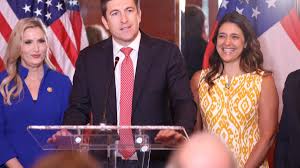
As the chair of the House Administration Committee—responsible for establishing rules and conduct for members and their staff—Steil joins a growing group of lawmakers advocating for restrictions on prediction market trading by Congress members, staff, and senior officials.
“Lawmakers should be legislators, not gamblers on policy outcomes,” Steil noted in a post on X earlier today. “I have introduced legislation to prevent lawmakers from using prediction markets to bet on governmental policies or electoral results.”
Steil’s insights carry weight within the discussion surrounding prediction markets trading, given his dual role as a member of the House Financial Services Committee and as chairman of the Crypto Subcommittee. This highlights the growing overlap between digital currency and prediction markets.
Obstacles Ahead for Steil’s Prediction Market Bill
While Steil’s initiative to prohibit Congressional members and their employees from trading on political event contracts has garnered endorsements from Speaker Mike Johnson (R-LA) and President Trump, navigating this proposal through to completion may prove difficult.
Some analysts are already predicting challenges for Steil’s provision, especially since it is linked to a larger bill designed to regulate stock trading by Congress members, which faces opposition from Democrats due to its lack of relevance to the president. This pushback follows the president’s management team carrying out over 3,600 transactions across various securities in the previous quarter.
The Senate has already implemented rules preventing its members and staff from trading on yes/no exchanges. Steil’s Stop Lawmakers from Predicting Act will require Senate approval, yet previous Senate actions on this matter indicate potential bipartisan support, especially if the proposal is separated from the stock trading legislation.
This bill outlines fines for violations at $2,000 or 10% of the transaction amount, whichever sum is higher, along with recouping any profits made from the trade. The bill explicitly states that members cannot use their Members’ Representational Allowance, Senate personnel funds, or political donations to cover these fines.
Congress Confronts Prediction Market Trading Issues
In light of various scandals, including some allegedly involving the White House, Congress is turning its focus toward the issue of insider trading on prediction markets. There’s a growing bipartisan willingness to restrict members and their staffs from engaging in trades concerning policies and political derivatives.
Some legislators have taken steps within their offices to declare prediction markets off-limits for themselves and their teams. For Steil, promoting trust between Congressional representatives and the American populace is essential.
“The American public deserves transparency, knowing their Congressional representatives are not capitalizing on confidential information. The Stop Lawmakers from Predicting Act guarantees this will not happen,” Steil expressed in a statement. “This legislation is vital for re-establishing public trust in elected officials. Lawmakers should be formulating policies, not gambling on their consequences.”