


The Prairie Band Potawatomi Nation has initiated legal action against the Kansas Lottery, claiming that the state is unlawfully distributing lottery tickets and running lottery machines within its reservation, thereby violating the Indian Gaming Regulatory Act (IGRA) as well as the Tribe’s sovereign rights.
The lawsuit, filed on Monday in the U.S. District Court for the District of Kansas, contends that “the Nation holds the exclusive authority to oversee gaming activities within its Reservation according to IGRA” and notes that the State of Kansas has never received authorization to sell lottery products on tribal property. The Nation is requesting that the court mandate the Kansas Lottery to halt its operations.
Dispute Over Sovereignty
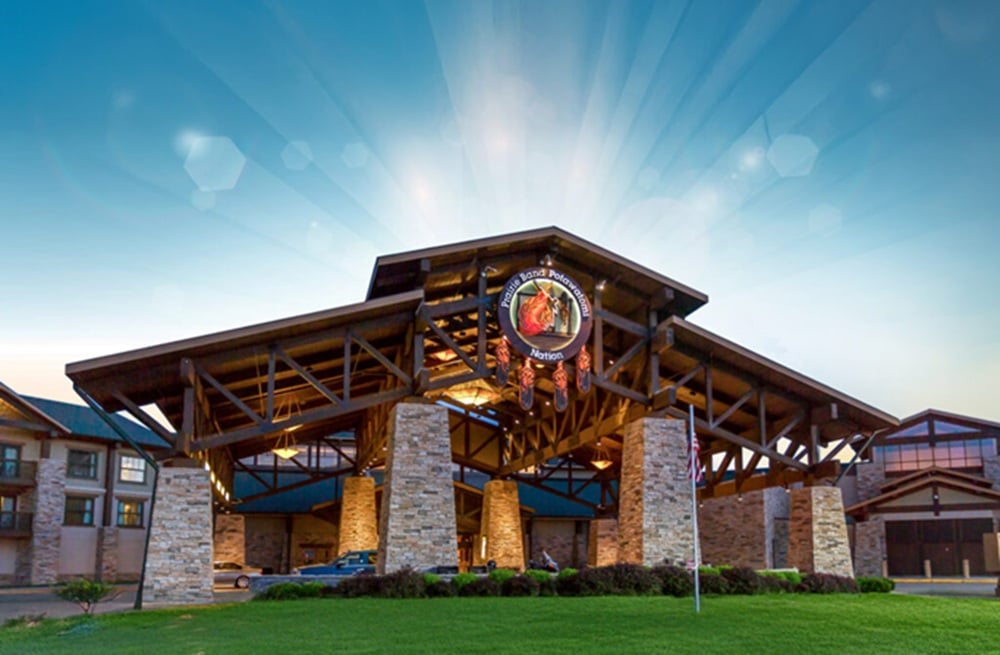
Covering roughly 122 square miles in northeastern Kansas, primarily in Jackson County and about 15 miles north of Topeka, the Prairie Band Potawatomi Nation’s reservation houses the Prairie Band Casino Resort. The tribe reports that the Kansas Lottery operates nearly two dozen lottery terminals within these reservation boundaries.
“The Prairie Band Potawatomi Nation has been a significant partner to Kansas and the four counties where our lands are located — fostering partnership, generating employment, and acting as an economic engine,” stated Joseph “Zeke” Rupnick, Chairman of the Prairie Band Potawatomi Nation Tribal Council, in a press release.
“At the very least, we expect state and local authorities to honor the treaties that have defined our boundaries for centuries, affirming our sovereignty over our ancestral land,” he added.
The Nation claims it dispatched several notices to Kansas Lottery Executive Director Stephen Durrell in May and June 2023, asserting that the lottery is unlawfully operating on tribal lands. Their legal representatives also held discussions with officials from the Kansas Attorney General’s Office regarding the issue, but the tribe states, “no resolution or effort by the state has been made to suspend its sales.”
Understanding the Landscape
The Nation seeks a court declaration affirming that its reservation has never been legally “diminished,” indicating that Congress has not formally reduced its boundaries.
Although a considerable portion of the land within the reservation has been transferred to non-tribal ownership in the past 180 years, the Nation argues that Congress has not abolished or diminished the reservation itself, suggesting that its original treaty boundaries continue to be protected under federal law.
This distinction is crucial, as maintaining the original boundaries legally ensures that retailers selling Kansas Lottery tickets within those limits might be conducting business on Indian territory.
This lawsuit echoes prior cases; in 2024, New York’s Cayuga Nation filed a complaint against the New York State Gaming Commission, alleging that lottery vending machines and ticket terminals operating on its reservation violated the Indian Gaming Regulatory Act by constituting unauthorized Class III gaming on Indian land.
A federal judge allowed that case to advance last year, although it remains undecided on its substantive issues.