


Chinese bettors engaged in legal gambling activities surrounding World Cup matches, placing wagers amounting to nearly USD 2 billion weekly, despite the national team’s absence from the tournament.
According to CCTV, the total revenue generated from the state-regulated China Sports Lottery during the six-week event reached an astounding 83.3 billion yuan, approximately USD 11.6 billion.
In conjunction with the China Welfare Lottery, the Sports Lottery stands as the only legal gambling avenue in the country. However, there’s a vast underground gambling network that includes offshore sportsbooks, illegal bookmakers, and online betting platforms aimed at Chinese clientele.
Research consistently indicates that illegal gambling activities greatly surpass those conducted legally within China. The UN Office on Drugs and Crime estimates the illegal gambling market in the country exceeds USD 145 billion annually, hinting that the actual amount wagered by Chinese individuals during the World Cup is likely significantly greater than the reported figures.
A Major Ratings Success
The World Cup also proved to be a significant ratings success. CCTV noted that the tournament’s broadcasts and related programming amassed over 70 billion total cross-media views leading up to the championship match.
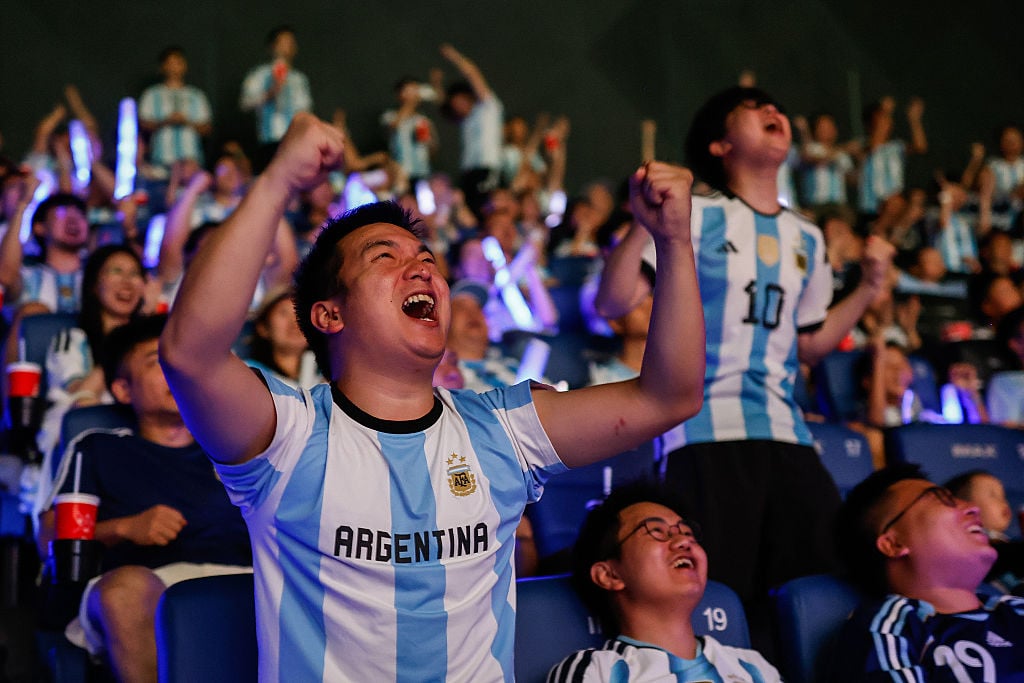
During the final match between Argentina and Spain, the live broadcasts captivated a cumulative audience of 282 million, with peak viewership touching 41.23 million. These statistics represent cumulative views across both television and digital platforms, not counting unique viewers.
The sports lottery in China offers both pari-mutuel and fixed-odds betting products; however, these do not completely replicate the services of commercial sportsbooks such as FanDuel or Bet365.
Currently, the bulk of World Cup wagering occurs through the lottery’s Jingcai Football, where bettors can place wagers on match winners, score predictions, and various other outcomes.
Distinct from commercial sportsbooks, this market is entirely managed by the state, which sets the available matches and determines the payout framework, offering a return-to-player rate of approximately 73%.
Challenges for the National Team
Despite the fervor for soccer in China, it has not been reflected in the national team’s performance. The squad finished fifth in its World Cup qualifying group, marking one of its most disappointing moments with a 7-0 defeat against Japan—one of its key sporting and geopolitical rivals.
The national team has qualified for the World Cup solely once, back in 2002. In 2015, President Xi Jinping, an avid soccer fan, committed to elevating China to a premier level in the sport, aspiring for the nation to one day host and win the World Cup. However, despite heavy financial investments in the game, the national team appears to be struggling further.
President Xi has expressed that pervasive corruption has stymied the progress of Chinese soccer, leading to a comprehensive anti-corruption campaign that has resulted in the imprisonment of top federation officials, incarceration of former national team coach Li Tie, and lifetime bans imposed on numerous athletes, coaches, and administrators due to match-fixing and bribery issues.