


Last week, tribal leaders traveled to Washington to express their frustration to Congress regarding online prediction markets infringing on their ancestral gaming rights protected by the federal Indian Gaming Regulatory Act (IGRA).
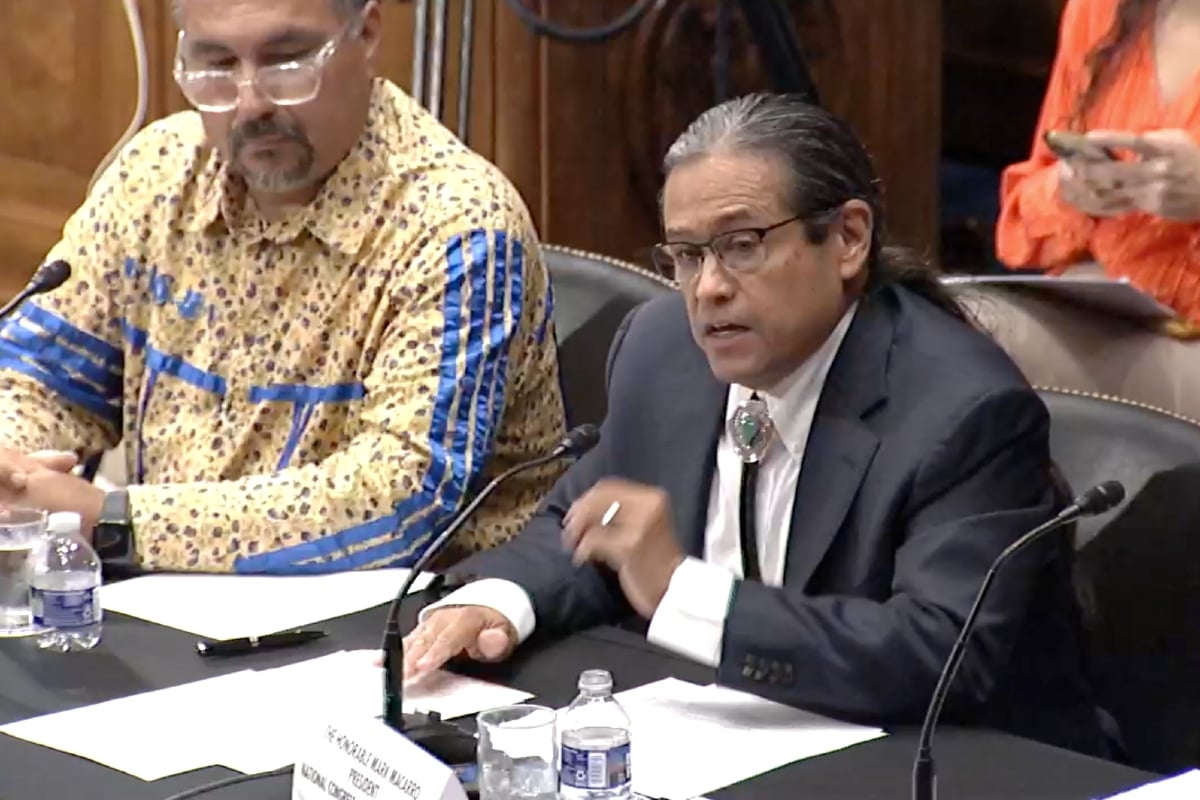
During a Senate Committee on Indian Affairs roundtable regarding prediction markets, various Native officials communicated to lawmakers that trading contracts mimicking gambling on financial exchanges could jeopardize Indian sovereignty.
“Funds funneled into gaming-like prediction markets detract from resources dedicated to tribal jobs, facilities, and community initiatives,” stated Mark Macarro, the president of the National Congress of American Indians.
In addition to his national role, Macarro serves as the tribal chairman of the Pechanga Band of Luiseño Indians, which runs one of the country’s largest tribal casinos, the Pechanga Resort Casino located in Temecula, California.
“Respect for the Indian Gaming Regulatory Act is paramount. It’s clear that when Congress enacted IGRA, tribes were bestowed exclusive authority over gaming operations on their lands. There was no intention for the Commodity Exchange Act to override IGRA,” Macarro emphasized.
Tribes: Prediction Markets Drain Resources
Tehassi Hill, vice chairman of the Indian Gaming Association (IGA), supported Macarro’s statements, asserting that federally regulated prediction markets directly siphon funds from tribal operations.
“Each dollar earned from gaming is vital for financing healthcare, education, elder housing, public safety, and infrastructure,” Hill noted. “Indian country embodies rural America. We are agricultural producers and support responsible innovation, including futures to mitigate risk and ensure equitable pricing. Nonetheless, we stand firmly against prediction markets that promote nationwide online sports betting to individuals as young as 18.”
Jamie Hummingbird, chair of the National Tribal Gaming Commission & Regulators, expressed that merely rebranding sports betting does not render it lawful.

The swift growth of sports wagering prediction markets represents an urgent challenge to tribal sovereignty. These products, presented as financial tools—such as commodities, derivatives, and swaps—should honestly be referred to for what they are: sports wagering.”
Jamie Hummingbird
The tribes are advocating for Congressional action, including the CLARITY Act, to restrict the Commodity Futures Trading Commission from permitting prediction markets that involve sports or any casino-style gambling.
Billions at Risk
The tribes argue that sports prediction markets and other gambling trades rob funds from their Native casinos and gambling venues. Nevertheless, tribal casinos reported record gross gaming revenue of $46.2 billion for the 2025 fiscal year.
This $46.2 billion figure marks a 5.3% increase over FY24, equating to a gain of $2.3 billion.
By the end of the fiscal year, there were 246 federally recognized tribal nations across 29 states managing a total of 545 gaming establishments.