


Published on: June 22, 2026, 04:34h.
Updated on: June 22, 2026, 04:34h.

- Analyst suggests Boyd Gaming could gain from consolidation in the casino sector
- Elements include a rise in scarcity value
- Boyd may acquire assets sold off by going-private competitors
Shares of Boyd Gaming (NYSE: BYD) saw an increase of nearly 2% on Monday after a financial analyst began coverage of the regional casino chain, pointing out various advantages that could arise from the ongoing consolidation in the gaming industry.
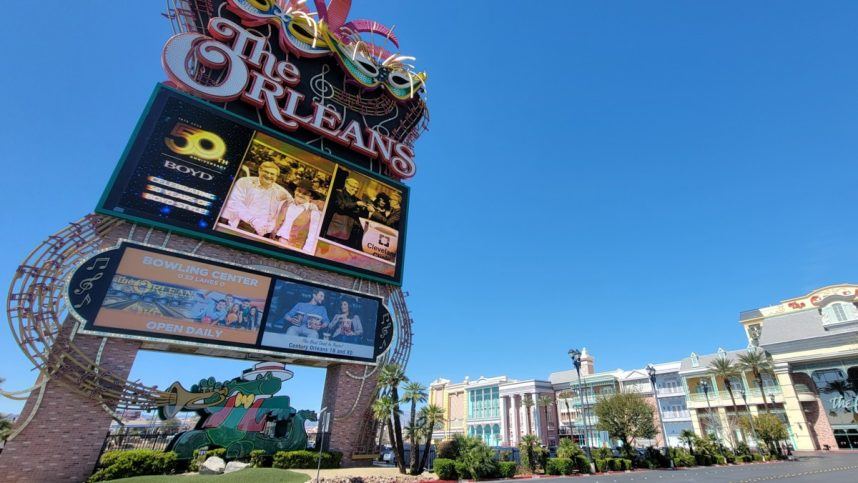
Benchmark analyst Mike Hickey has assigned a “buy” rating to the Orleans operator, setting a price target of $100, which signifies a potential upside of 15.8% based on the current closing price. In a detailed report for clients, Hickey emphasizes Boyd’s effective capital allocation, a solid growth trajectory, health in the Las Vegas local market, promising consumer trends, and a wave of consolidation within the casino sector as driving forces for the stock’s value.
Industry experts have suggested that Boyd might be an interested buyer for assets that Caesars Entertainment (NASDAQ: CZR) may offload amid its acquisition by Golden Nugget owner Tilman Fertitta. In addition, MGM Resorts International (NYSE: MGM) is currently considering an $18 billion takeover offer from Barry Diller.
“The recent developments concerning Caesars and MGM Resorts have sharpened investor interest in the values of gaming assets, strategic options, and the diminishing number of publicly traded gaming companies,” remarks Hickey. “Boyd’s robust balance sheet places it in a favorable position to explore acquisition possibilities that may emerge due to future asset sales.”
Headquartered in Las Vegas, Boyd boasts one of the industry’s most formidable balance sheets, generating an impressive operating cash flow of $977 million in the previous year. This financial strength ensures it has the necessary resources to pursue acquisitions if competing properties enter the market.
Increased ‘Scarcity Value’ for Boyd
MGM has only confirmed receipt of Diller’s offer at this time, but should both it and Caesars — the leading operators on the Las Vegas Strip — eventually transition to private ownership…
This situation would leave Wynn Resorts (NASDAQ: WYNN) as the only publicly traded option for investors targeting the Las Vegas Strip, although Wynn is not an ideal choice as it derives most of its earnings and revenue from its Macau operations.
This means the number of publicly traded stocks associated with significant Las Vegas exposure could decrease. Hickey anticipates Boyd will “benefit from increased scarcity value as more operators exit the public market.”
Boyd, a leading venue in downtown Las Vegas, along with Red Rock Resorts (NASDAQ: RRR), stands to remain as one of the few publicly traded companies with a substantial presence in Las Vegas if both Caesars and MGM become privately held.
Boyd’s Discerning Approach to Potential Acquisitions
With ongoing acquisition discussions for Caesars and MGM, speculation around asset divestiture has predominantly focused on Caesars due to the geographic overlap with Fertitta’s Golden Nugget. Many analysts view the need for both voluntary and forced asset sales as a certainty for the acquisition to be finalized.
Talks are circulating that Boyd could be interested in particular Caesars/Golden Nugget assets that may be offered for sale. The operator is likely to approach acquisitions cautiously, concentrating on properties that can yield impressive long-term profits while generally avoiding those where the real estate is owned by a separate landlord from the operator selling the rights. Fortunately for Boyd and its investors, the company can afford to be selective as it does not need to rush into acquisitions.
“Although Boyd’s investment potential is primarily hinged on operational performance, free cash flow generation, and prudent capital allocation, we believe that ongoing consolidation within the industry provides a boost in valuation support and raises the scarcity value of the remaining public gaming stocks. It also opens up opportunities for well-funded operators to engage in the industry’s asset rationalization if attractive assets become accessible,” concludes Hickey.