


Published on: April 14, 2026, 09:12h.
Updated on: April 14, 2026, 10:43h.

- Former MP Brian Masse critiques Canada’s rapid launch of igaming during a CBC interview
- Paul Burns, President & CEO of the Canadian Gaming Association, responds in a Casino.org interview
- The count of licensed igaming operators in Ontario reaches 48
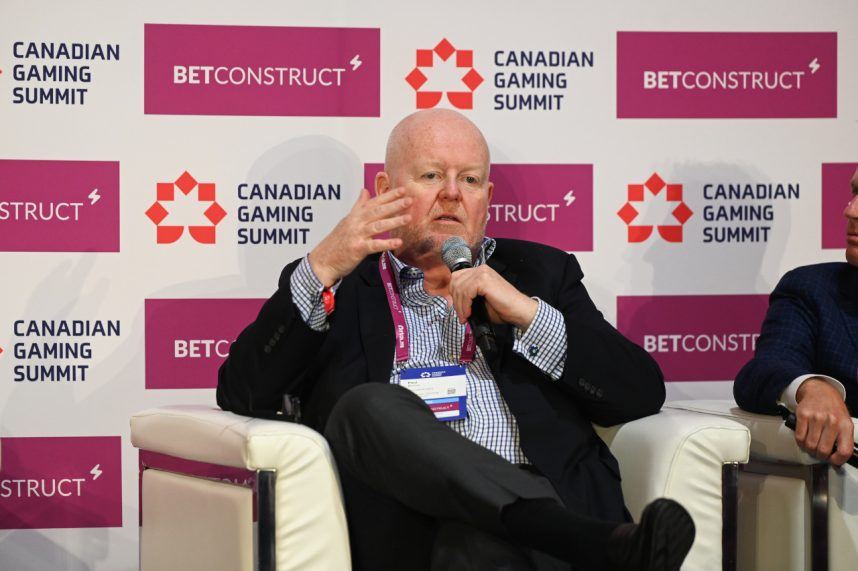
In a recent interview with Casino.org, Paul Burns, the President and CEO of the Canadian Gaming Association, countered the criticisms directed by former Canadian MP Brian Masse regarding the rapid rollout of iGaming in Canada, asserting that player protection is the primary aim of regulation.
In an interview with CBC News, former NDP MP Brian Masse expressed his discontent regarding the execution of single-event sports betting in Canada, labeling it as “deplorable.”
Masse initiated a private member’s bill in 2019 to end the ban on single-event sports betting. A year later, Conservative MP Kevin Waugh reintroduced this bill, which ultimately led to the enacting of Bill C-218 in 2021.
Masse’s concerns mainly originate from the overwhelming influence of the private sector in the igaming sphere since the competitive market in Ontario launched in April 2022. He noted, “the launch went full throttle.”
He suggested that a more gradual implementation under the Ontario Lottery and Gaming Corporation could have been beneficial.
Trade Association Leader Responds
In his conversation with Casino.org, Paul Burns defended the rapid launch, indicating that the growth of the U.S. market and the urgency for provinces to implement their laws influenced their chosen course.
“People were clearly spending money online on sports with no Canadian regulated option, which sparked the debate,” Burns articulated. “The online gaming sector has consistently expanded. The U.S. law changes in 2018 raised awareness and spurred advertising.”
The Canadian gaming model empowers provinces to chart their own course.
“Ontario made its online gaming objectives explicit when launching,” he explained.
“The focus was on enhancing consumer choice, acknowledging where players were already engaged. They excelled in protecting consumers, establishing what could be deemed the best regulatory framework in North America, if not globally. I don’t believe Brian acknowledges this.”
Growth of the Unregulated Market
As Burns highlighted, Canadians have accessed online gaming and sports betting for 25 years, with the unregulated market expanding persistently.
“Given the size of this sector, Ontario’s approach opened the market, providing players with numerous choices,” Burns remarked.
“In Ontario, 86% of gaming activities occur outside the black market. This is not the scenario in other parts of Canada,” he added.
During the interview, Masse expressed apprehensions regarding the significant level of gambling advertisements in Canada and supported Senator Marty Deacon’s initiative to limit sports betting ads across the nation.
Conversely, Burns conveyed his displeasure regarding potential restrictions, arguing attention should be redirected toward the black market rather than regulated operators.
“Regardless of concerns about seeing ads… these ads originate from licensed and regulated companies that maintain established consumer protections,” Burns detailed.
“These platforms incorporate player exclusion features, ensure fair games, and offer tools for player protection. Yet, Canadians continue to access unregulated sites devoid of these safeguards, some of which lack age verification as well. The focus should be on addressing this issue rather than targeting a few commercials from regulated companies,” he added.
Addressing Misconceptions
In essence, the igaming sector has significantly evolved, and the unregulated market thrives in Canada, which is where the focus should lie, according to Burns.
Masse brought attention to the “unregulated” activities within the igaming landscape, which Burns disputes, citing Ontario’s impressive channelization rate of 86%.
“It is up to provinces to establish their regulations for enhanced player protection. They can choose whether to adopt the Ontario model or devise a different strategy that better suits their needs, going through their process to make that happen,” Burns articulated.
Alberta has initiated its own preparations, aiming for a market launch on July 13. Burns confirmed that other provinces are also examining their gaming legislation seriously.
Modernizing the Criminal Code
Additionally, Burns stressed the need for amendments to the Criminal Code to improve market defenses against illegal operators advertising on social media.
“Why has the issue of the grey, unregulated market persisted in Canada for 25 years?” Burns asked. “There’s ambiguity in the Criminal Code, and it might be time for clarity.”
The regulatory frameworks must adapt, and the laws need modernization. It would be advantageous for Ottawa to consider the tools provincial authorities require rather than focusing on advertising on television,” Burns stated.
Masse may not appreciate the recent developments – as first reported by Canadian Gaming Business, BetNova, an online casino and sportsbook provider, has just entered the Ontario market.
This addition raises the count of licensed igaming operators in Ontario to 48 (a few, like Rivalry, have exited the market in the past year), with a total of 82 gaming websites as reported by iGaming Ontario. The province’s open market generated over $4 billion in revenue in 2025.