


Date of Publication: May 13, 2026, 11:35 AM.
Last Revised: May 13, 2026, 11:56 AM.

- UFC’s Dana White appeals to President Trump to overturn the OBBBA’s new 90% gambling loss deduction limit
- White’s message warns that the “phantom income” tax discourages legal betting and counters Trump’s No Tax on Tips initiative
- This intervention by White represents a high-profile industry initiative to reinstate the full 100% gambling loss deduction
The President and CEO of UFC, Dana White, reached out to President Donald J. Trump on May 11, 2026, pushing for the repeal of a new law that caps gambling loss deductions at 90%.
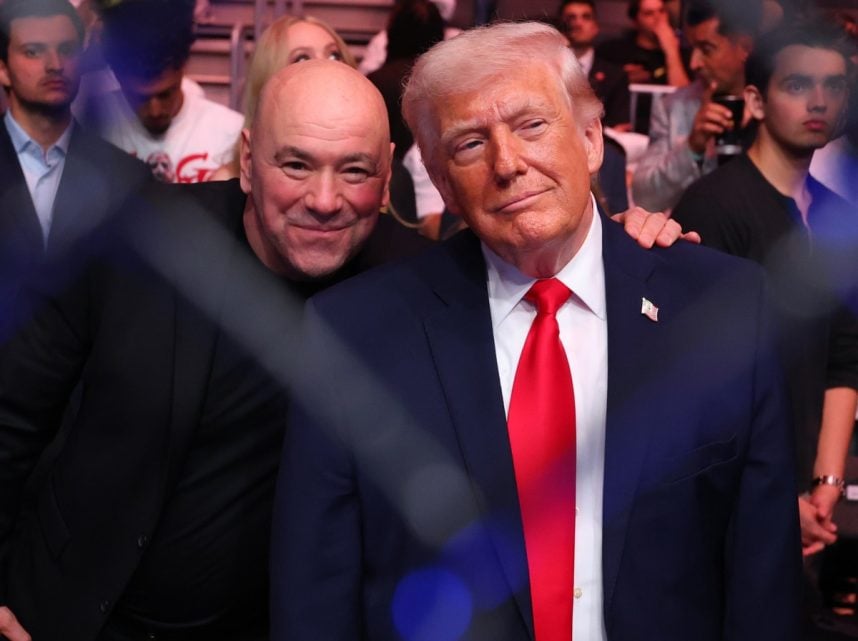
This regulation is a highly debated aspect of the comprehensive One Big Beautiful Bill Act (OBBBA) that Trump enacted in July 2025. Previously, gamblers had the option to deduct their losses at a 100% rate against their winnings (up to their total winnings).
The revised regulation, effective as of January 1, 2026, restricts loss deductions to just 90%. This change may result in “phantom income,” meaning that bettors who break even or incur overall losses could still be liable for federal taxes on a portion of their gambling income.
Bipartisan moves to reinstate the full deduction, such as the FAIR Bet Act introduced by Rep. Dina Titus (D-Nevada) and Rep. Guy Reschenthaler (R-Pennsylvania), have stalled.
Details of the Appeal
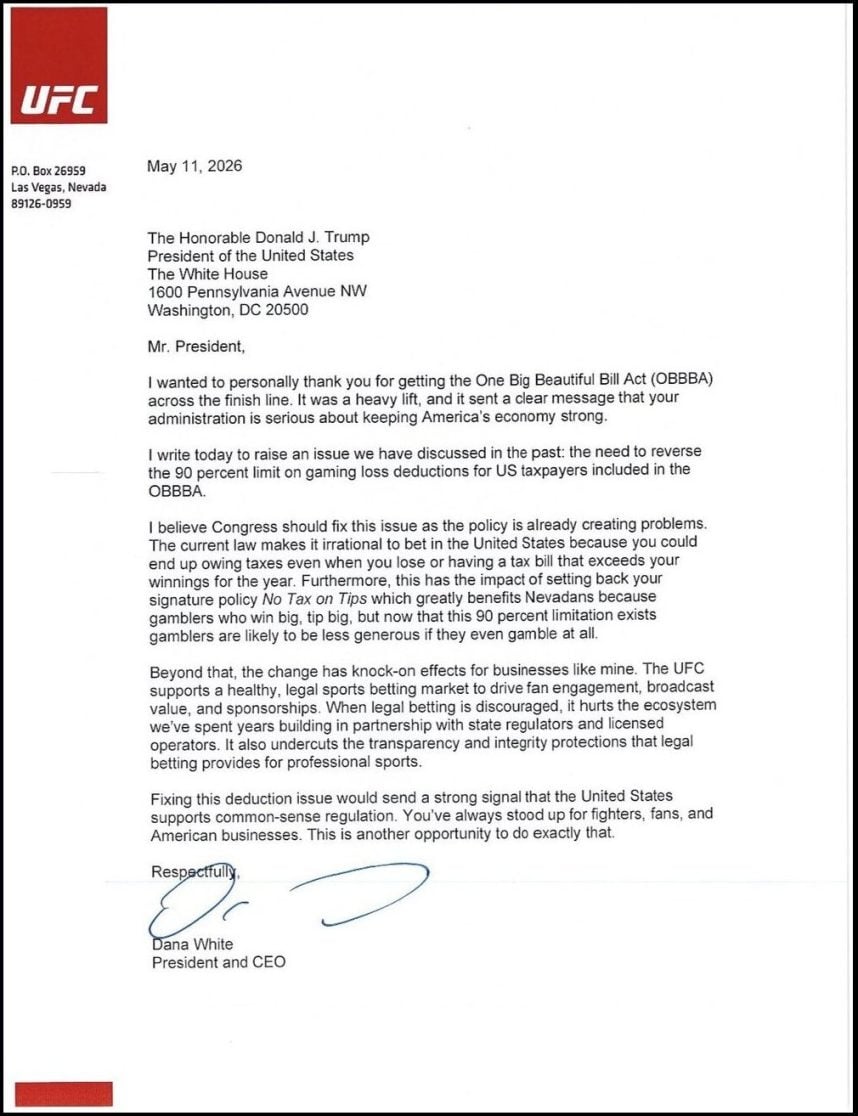
The letter, drafted on official UFC letterhead and addressed to the White House, commends Trump for the OBBBA, stating it demonstrates his commitment to strengthening the U.S. economy.
White argues that limiting the gambling-loss deduction to 90% dissuades legal sports betting and negatively impacts businesses that rely on a robust regulated market, including the UFC.
He expressed concern that the new policy is already leading to “irrational” tax implications that contradict Trump’s No Tax on Tips policy since lower wins result in decreased tips.
Furthermore, White linked the matter directly to the UFC’s business framework, stating:
The revision has cascading effects for enterprises like mine. The UFC endorses a thriving, legal sports betting market to enhance fan involvement, broadcast value, and sponsorships. When legal wagering is discouraged, the ecosystem we’ve dedicated years to nurturing suffers.
In conclusion, White framed the potential adjustment as being in line with Trump’s pro-business philosophy:
Addressing this deduction problem would convey a powerful message that the United States favors sensible regulation.
How the Communication Became Public
Dustin Gouker, a writer on gambling and prediction markets, alongside Rob Linnehan, an editor and regulatory writer for Sportradar, were among the first to disclose the letter on their X accounts. It remains unclear if White or the UFC circulated it or if it was obtained through other means, but the rapid distribution indicates it was likely shared with industry insiders soon after being sent.
As a notable high-stakes gambler and a long-time ally of Trump, White stands out as the premier sports executive advocating for the reversal of the deduction limit. His correspondence adds momentum to the ongoing lobbying efforts by the American Gaming Association and stakeholders from Nevada, who assert that the 90% cap undermines the market that regulators and operators have labored to establish for years.
No official response from the White House has been reported as of yet.