


Officials in law enforcement express that they face significant challenges in addressing illegal gambling due to inadequate penalties outlined in current state legislation. Nevertheless, a recently passed law equips authorities with a robust new instrument in their efforts to combat this issue.
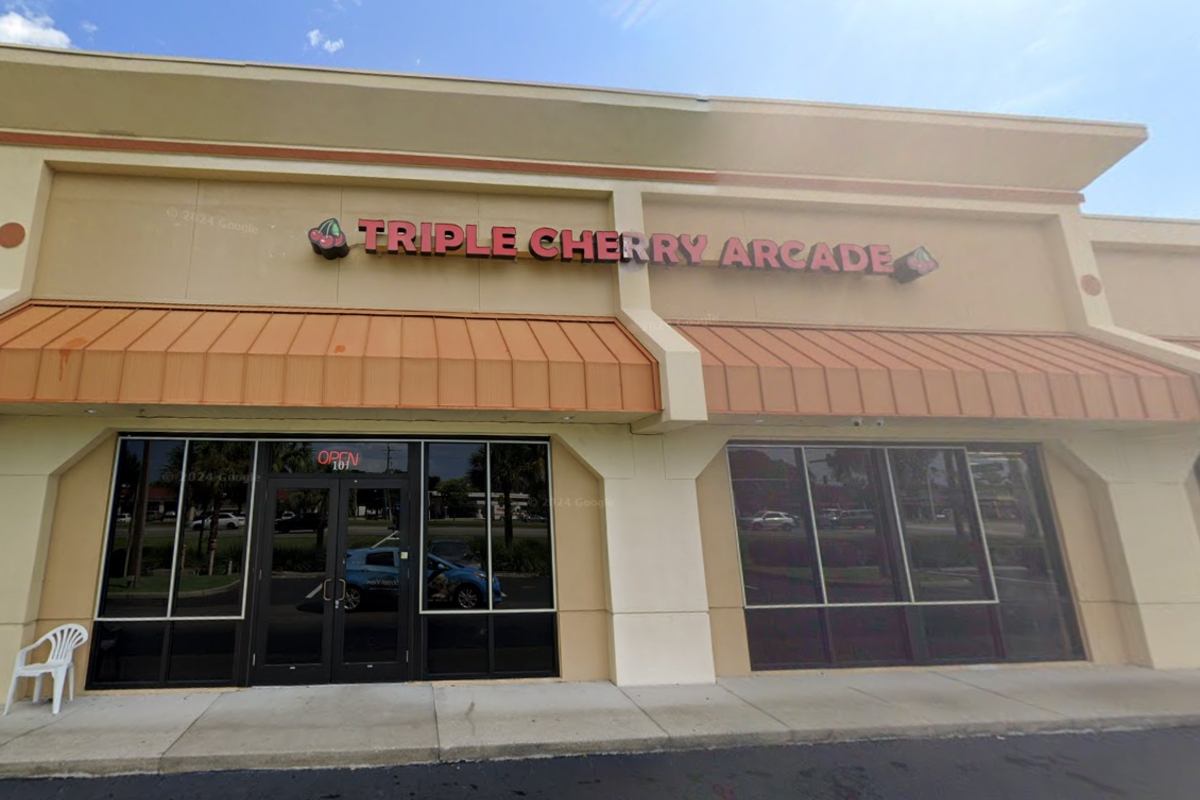
Florida Attorney General James Uthmeier and the Florida Gaming Control Commission (FGCC) assert that illegal slot machines are spreading throughout the Sunshine State at an alarming rate. The state officials highlight that these unlawful gambling operations, often marketed as arcades and amusement centers in shopping plazas, exploit senior citizens, lack essential consumer protections, and provide significantly worse payout rates than regulated slot machines.
As Uthmeier and the FGCC intensify their efforts against these unlawful gambling establishments, they point out that state law usually only permits misdemeanor penalties. Such minimal consequences are insufficient to deter offenders from continuing their illegal activities.
Nonetheless, a new law may provide the necessary leverage to tackle the illegal gambling crisis.
Property Owners’ Accountability
Florida Senate Bill 168 was enacted in June by Governor Ron DeSantis (R). Although state lawmakers did not advance legislation to elevate the criminal penalties for operating a gambling house to felonies, the Florida Legislature did modify the state’s public nuisance laws to address illegal gambling activities.
Under SB168, effective July 1, 2026, any commercial property identified as hosting illegal gambling can be declared a public nuisance. This modification permits counties and municipalities to impose fines and sanctions on illegal gambling enterprises, potentially resulting in liens against properties.
Effective immediately, a county can demand the closure of an illegal gambling operation on the grounds of being a public nuisance. Should the business fail to comply, the county has the authority to levy fines starting at $250 per day, escalating to $500 per day after one year. If the business neglects to pay these fines within three months, the county may file a lien on the property and initiate foreclosure actions.
Essentially, SB168 broadens the legal obligations for landlords to ensure that illegal activities, including unregulated gambling, do not occur on their commercial premises, akin to regulations surrounding drug distribution and prostitution.
This public nuisance regulation does not extend to landlords leasing residential spaces.
Uthmeier reports that law enforcement operations in 2026 have removed over 3,100 unregulated gambling machines from circulation. Additionally, more than $1.7 million in cash from these operations has been confiscated, resulting in 81 arrests.
Legitimate Gambling in Florida
The Seminole Tribe holds a near-monopoly on casino gambling within Florida. Outside of Miami-Dade and Broward counties, slot machines are strictly prohibited except within the tribe’s six Hard Rock and Seminole casinos.
Furthermore, the Seminoles possess exclusive rights to online sports betting in Florida through the Hard Rock Bet application.