


Thanks to a significant boost from sports event contracts, the average daily volume (ADV) throughout the prediction market sector experienced an impressive 80% month-over-month (m/m) increase in June, reaching an astounding $1.7 billion, as reported by Jefferies data.
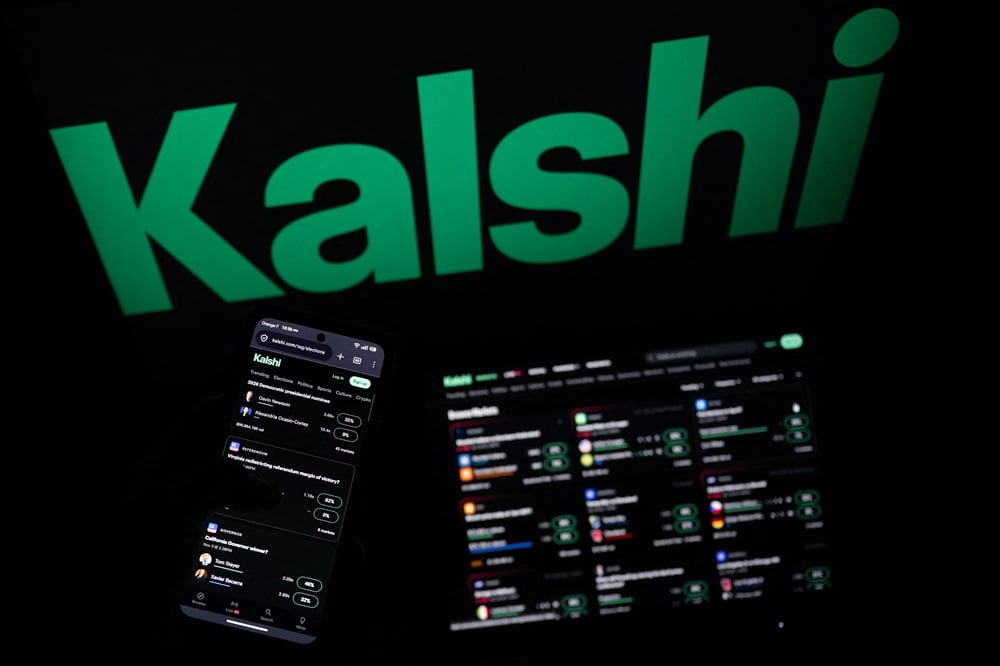
In a recent analysis provided to clients, Jefferies analyst Daniel Fannon highlighted that Kalshi, the leading yes/no exchange platform, surpassed its competitors last month in both ADV and open interest growth. Kalshi’s ADV skyrocketed by 90% month-over-month, with open interest on the platform rising 94%, outpacing the industry’s overall increase of 64%.
Projections suggest that Kalshi commands approximately 90% of the US prediction market, and the June figures referenced by Jefferies are consistent with this estimation. The firm reported that Kalshi’s ADV for June totaled $1.1 billion, while its rival Polymarket experienced an average daily turnover of $469 million. In essence, these two prediction markets encompassed nearly $1.6 billion of the total industry ADV of $1.7 billion. This dominance is also apparent in terms of open interest (OI).
“Kalshi produced $1.21 billion in OI for June (+94% m/m; +1,675% year-over-year (y/y)), compared to Polymarket’s OI of $569 million (+9% m/m; +320% y/y). Other platforms collectively had OI of $137 million (+672% m/m; +32,315% y/y). Notably, Polymarket’s OI market share dropped to 30% (down from 45% in May),” noted Fannon. “Meanwhile, other platforms saw their OI market share increase to 7% (up from 2% in May).”
OI denotes the total value of active, unresolved contracts within a prediction market.
Diverse Offerings Beyond Sports
The ongoing legal and regulatory discussions surrounding domestic prediction markets revolve around whether these entities operate as sports wagering companies. Much of the skepticism stems from the significant presence of sports derivatives available on platforms like Kalshi and Polymarket.
While the sector is expanding its product offerings, sports event contracts remain a crucial component of their operations. These derivatives saw an ADV increase of 89% last month, alongside a notable 93% growth in the non-sports category.
“Sports continues to hold a substantial 67% share of total ADV (similar to May),” Fannon added. “In terms of OI, the non-sports segment commands a 51% share, down from 73% in May. For June, non-sports OI registered at $1.24 billion (+37% m/m; +972% y/y), while sports OI amounted to $1.181 billion (+246% m/m; +5,648% y/y).”
The growth in non-sports areas is vital as it alleviates regulatory pressures associated with yes/no exchanges and demonstrates to investors that the increasing valuations are supported by a broader range of products.
Intense Competition Marked June in Prediction Markets
According to Fannon, June also brought notable competitive developments. During this month, Rothera, a stand-alone entity backed by Robinhood and Susquehanna International Group, began capturing Major League Baseball and World Cup order flows that had previously been directed to Kalshi.
Additionally, Cboe Global Markets introduced Cboe Predicts on Interactive Brokers and Schwab, while DraftKings launched DKeX, its proprietary exchange, eliminating its need to facilitate yes/no trades through third parties.
Rothera quickly established itself with a strong performance, featuring an ADV of $70 million in June. On June 26th, DraftKings unveiled its in-house prediction markets exchange, DKeX, achieving $3.4 billion in annualized consumer volume and $11.3 billion in annualized total trading volume for the week concluding June 21.