


Published on: May 15, 2026, 10:09h.
Updated on: May 15, 2026, 10:09h.

- Minnesota poised to prohibit prediction markets
- If Gov. Walz endorses the legislation, a legal dispute with the CFTC is anticipated
Minnesota may soon become the first state to impose a ban on prediction markets, which could initiate a legal confrontation questioning the state’s authority to regulate an industry under federal jurisdiction.
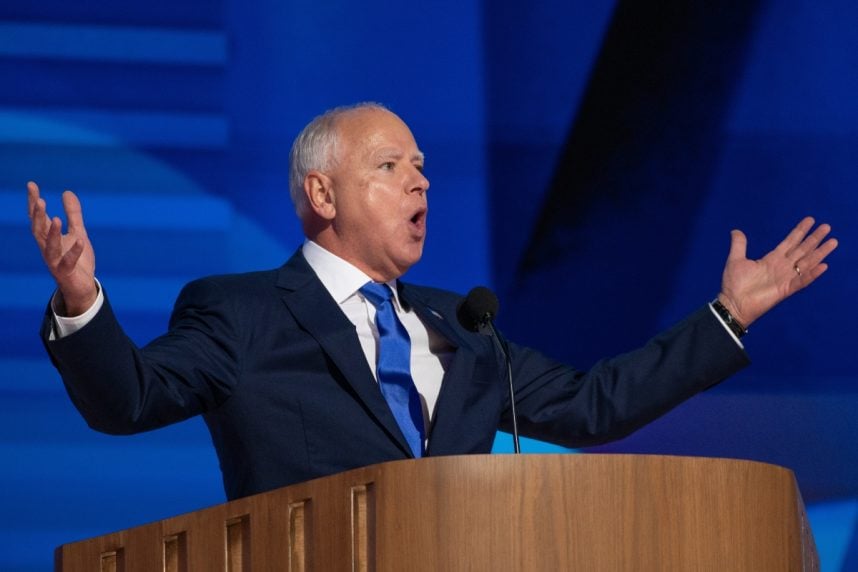
On Tuesday night, Minnesota’s Legislature approved a policy bill that includes a ban on prediction markets, which are overseen by the Commodity Futures Trading Commission (CFTC), a U.S. federal agency.
Prediction markets have been around since the 1970s when the CFTC was established, enabling traders to speculate on futures, options, and swaps.
Historically, prediction market trading involved buying and selling shares connected to agricultural goods, foreign currencies, and governmental bonds. In recent years, these markets have expanded to include trades on cultural happenings, political events, and even sports since last year.
Detractors argue that prediction markets have crossed into gambling territory, but the CFTC has defended the new market options as “innovative financial products” that empower traders to utilize their knowledge and skills for financial gain.
Anticipated Legal Conflict
If Minnesota’s Governor Tim Walz (D) signs the bill criminalizing prediction markets, a confrontation with the CFTC and affiliated market licensees is expected, as the CFTC argues its jurisdiction under federal law to regulate the Commodity Exchange Act, claiming states cannot enforce their regulations.
“States are unable to bypass the explicit directions set by Congress. I consistently assert that the CFTC will not permit overly assertive state governments to weaken the agency’s established authority over these markets,” stated CFTC Chair Michael Selig.
“Any interference with federal laws managing financial markets will prompt legal action from us,” Selig cautioned.
Walz, who faced defeat as the Democratic Party’s VP candidate during the 2024 presidential election, may find himself at the center of a legal dispute with the Trump administration. Selig, appointed by the former president, has been a staunch advocate for sports trading platforms like Kalshi and Polymarket, both of which have connections to Donald Trump Jr., who serves as a “strategic advisor.”
Trump Jr. is also an investor in Polymarket, while Trump Media is committed to launching its own prediction market known as Truth Predict.
Majority of Users Experience Losses on Prediction Markets
An investigation by The Wall Street Journal revealed that a mere 0.1% of traders on Polymarket are responsible for 67% of the exchange’s profits. Similarly, most traders on Kalshi also incur losses.
The WSJ study discovered that for every profitable trader, there are approximately 2.9 unprofitable users.
“Casual investors are losing money, while a select few expert traders, including firms with access to extensive data resources, are profiting,” concluded the WSJ.