


Published on: May 22, 2026, 09:12h.
Updated on: May 22, 2026, 09:12h.

- The US Supreme Court is set to explore whether states can prohibit sports contract trading on federally sanctioned prediction markets
- In a pivotal May 2018 ruling, SCOTUS granted states the authority to establish their own sports betting regulations
- New Jersey argues that Kalshi is functioning as an unlicensed sportsbook
Is a state empowered to restrict specific event contracts on federally regulated prediction markets? This is a significant question the United States Supreme Court may soon address.
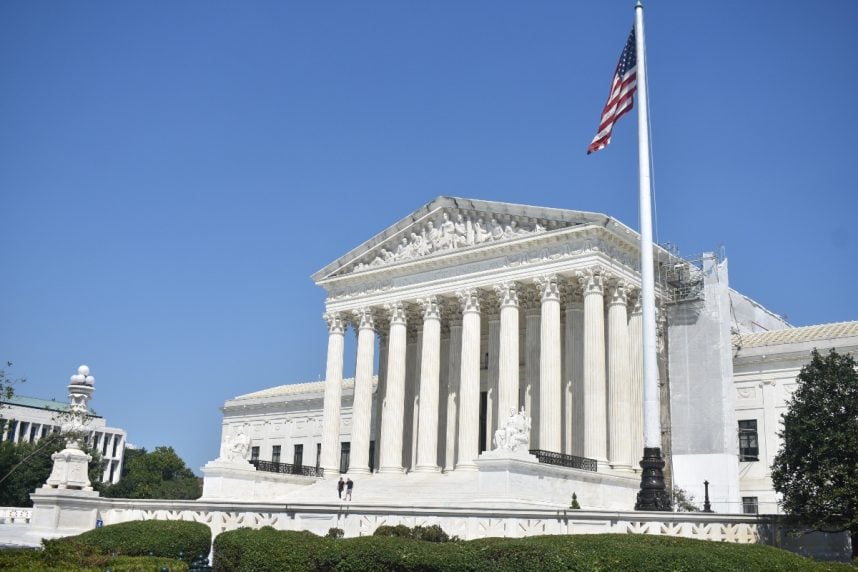
In April, the US Court of Appeals for the Third Circuit delivered a 2-1 verdict favoring Kalshi, suggesting that New Jersey lacks the authority to control trades made on its platform. New Jersey contended that trading contracts related to sports should be viewed as sports betting and thus claimed Kalshi operates unlawfully as an unlicensed sportsbook.
Recently, both Kalshi and New Jersey petitioned the Third Circuit to “stay all proceedings.” This action follows New Jersey’s announcement to escalate the matter to the US Supreme Court.
“Defendants have indicated their intent to pursue further review of the Third Circuit’s ruling in the US Supreme Court. As such, the parties respectfully request that this Court continues to stay proceedings until a decision by the US Supreme Court on whether to grant certiorari, and if certiorari is granted, until the Supreme Court concludes the case,” read their joint status report.
“An ongoing stay would help conserve the resources of both parties and this Court, furthering the aims of judicial efficiency,” the filing added.
Will the Supreme Court Take Up the Case?
The Supreme Court reviews thousands of cases annually but accepts only about 1% to 2% of petitions.
In a notable case from the gaming sector, the Supreme Court agreed to review New Jersey’s challenge against PASPA (the Professional and Amateur Sports Protection Act), ruling it unconstitutional due to violations of anti-commandeering principles set forth in the US Constitution. In May 2018, SCOTUS acknowledged that the federal law incorrectly permitted Nevada to conduct sports betting on individual games while ordering the other 49 states to prohibit such activities.
Prediction markets have sparked significant debate and are increasingly in the spotlight among lawmakers at both state and federal levels. Recently, a Senate subcommittee heard testimonies from the American Gaming Association, which asserted that trading contracts for sports events is akin to unregulated sports wagering.
Constitutional Implications
Similar to New Jersey’s challenge against PASPA, this case concerning prediction markets raises critical constitutional questions.
As prediction markets fall under federal jurisdiction by the Commodity Futures Trading Commission (CFTC), federal rules supersede state legislation. The CFTC is responsible for overseeing the Commodity Exchange Act, a federal law enacted in 1936.
Article VI, Clause 2, known as the Supremacy Clause, establishes the US Constitution as the “supreme Law of the Land.”
“Judges in every State shall be bound thereby, anything in the Constitution or laws of any State to the contrary notwithstanding,” as per the foundational legal framework.